Curiosity has been a constant in my life. I’ve always enjoyed learning about the world’s unique cultures, and how they have changed over the last few hundred thousand years. I like to understand where people live, how they move, interact, develop, and create.
A few months ago, I embarked on a journey to explore my ancestry. Beginning as a lighthearted personal project, I was quickly inspired to get to know my family on a deeper level by documenting my lineage. It is only the beginning of a profound and emotional process for me, but I want to share what I’ve done so far.
Inspired by the science
About a year ago, I decided to get a DNA test done. Despite public concern for security and privacy regarding our bio-data, my curiosity was too strong, so I went ahead and mailed my spit away. At this point, it is very common to have these tests done. If it screws me over in 20 years, I bet I’ll get in on a fat lawsuit with a few million others.
A few weeks later, the results were accessible online. I was most eager to see my estimated ancestry makeup. I had an idea of what would be reported, and the results were very close. But a few data points surprised me, and I was pleasantly surprised to see the geographic scale in which they can place genetic estimates. Down to the city, I can now see where there is likely evidence of ancestry. As a geographer, it was a goldmine of information for me to comb through!
After riding on the high of this amazing science, and sharing it with my loved ones, a different curiosity started tugging at me. Something felt missing.
While DNA tests can provide estimated origins, percentages cannot tell you about who those people were. What were their names? What kind of home did they have? Did they have lots of kids? Did they migrate? Why? Did they marry people from other cultural groups? What was the socioeconomic and political climate during their lives?
This is where the geographer’s brain came out, and I decided to take my ancestry research many steps further. Data can only tell you the bare minimum. To get the full picture, you need the stories behind it.
A big part of cultural geography is asking what people’s customs and practices are, and what systems govern their lives. In the back of my mind, I wanted to find these out. In the front of my mind, I was simply thinking “I could ask my family about their family”. This realization opened me up to a whole world of priceless knowledge.
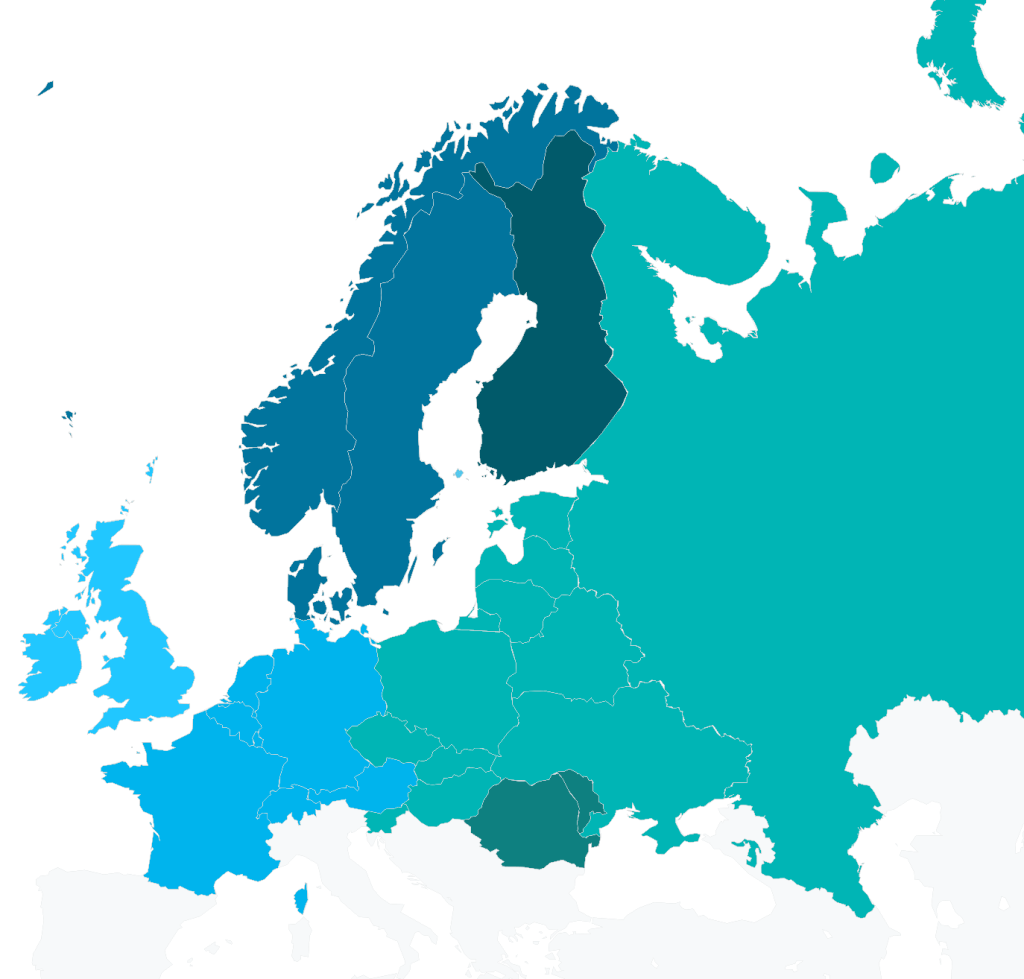
It is important to note that everything is estimated when it comes to ancestry and genealogy interpretations from DNA. The service I used only referenced my European data against a few thousand others for each regional category. It should be taken with a medium-sized chunk of salt. However, we can get a sense of some patterns in our DNA. With this in mind, here is my breakdown:
I am 99.9% white, which breaks down approximately into…
- 32% Scottish
- 26% Finnish
- 15% Polish
- 14% German
- Unassigned NW European
Notably…
- I have more Neanderthal DNA than the majority of other test-takers
- There is a single segment of my DNA which matches reference populations of Ashkenazi Jewish people. This only accounts for 0.2% of my DNA. I didn’t give this much thought, until I learned that my 5th great grandpa has a Jewish name and was born around the same time indicated by the DNA report. This correlation could mean something, but it may not.
My DNA report largely matched what I already thought. I associated each of my grandparents with a nationality, and only one turned out to be different. Until I asked her, I didn’t know my maternal grandma had a Scottish parent – I thought both were Polish. This explains why I have over a quarter British DNA.
Finnish homogeneity and record-keeping
I knew my grandma was culturally Finnish, born in Canada to immigrant parents. Without the DNA test, I’d never know with for sure if we were genetically Finnish. Through the test and following ancestry research, I concluded that my Finnish ancestors, and most of their descendants, keep family close – both geographically and genetically. Most of my Finnish genetic relatives (whose profiles I can view on the DNA site) are almost 100% Finnish. I can infer that this branch of my family, for many centuries, have rarely had children with non-Finns.
In addition, most relatives who I found on the family tree website are Finnish. They seem to keep detailed records, and there is more data than I can even digest.
Somehow, there is slightly over a quarter Finnish DNA in me. This was either an estimate error, or someone else in my family has trace DNA. Either way, the Finnish blood is strong, and I think that is badass.
Assembling my tree
Once I was equipped with the science, the natural next step was to create a family tree. Seeing as percentages cannot reveal names, I started conversations with my family. I reached out to relatives who had already done some research, leading to a wealth of awesome documents to start. Then, I introduced my ‘project’ to the four most important people: my grandparents. It took some courage to ask them to describe their tree, because I knew that almost every person I’d be asking about is no longer alive. These people are not just names and birth dates but real, lived relationships. I explained that my ancestry work only has to go as far as they are comfortable helping me with.
Graciously, they provided me with detailed lists, and chatted with me at length. I then took the knowledge I collected to my computer, and things really started to materialize.
With every addition, I got butterflies. These are the people that led to me, in this specific millennium, on this one little planet. It is pretty damn cool. And I sense that my grandparents felt happy that I wanted to learn about their family.
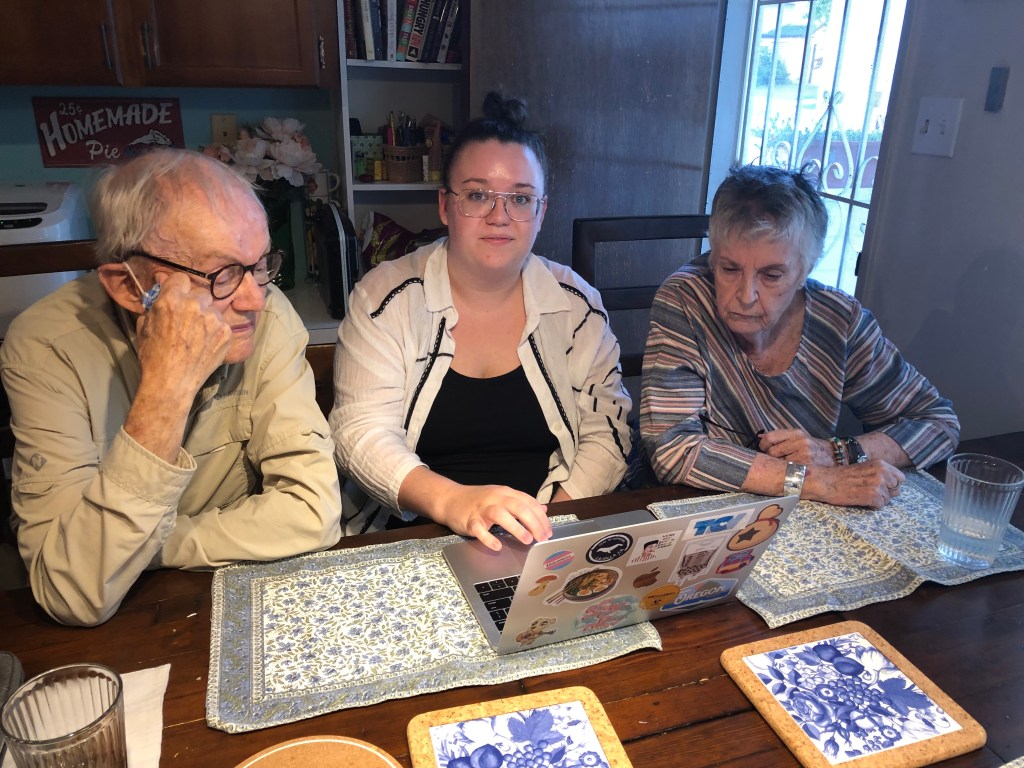
I even sat down with both pairs separately once my initial tree was set up, and showed them. There were moments of silence from them that I was not used to – it could have been awe, discomfort, or both. But it was meaningful, no doubt.
Now that the information is recorded, it is held forever. If I was living in a time before the internet, there is a good chance I wouldn’t have done this work; it is easier now.
Curious lass
You know how little kids ask “why” 10 times in a row until you’ve reached some intangible philosophical quandary? I never grew out of that. When it comes to my family, I’ve always wondered what their parents and parents-parents were like. I wanted to know how their parents grew up, what they did for work, and what it was like immigrating. But as a child, it was not easy to articulate this. And when I did sit and listen to my grandparents’ stories, I often forgot over time, because I didn’t put in the effort to remember or record it.
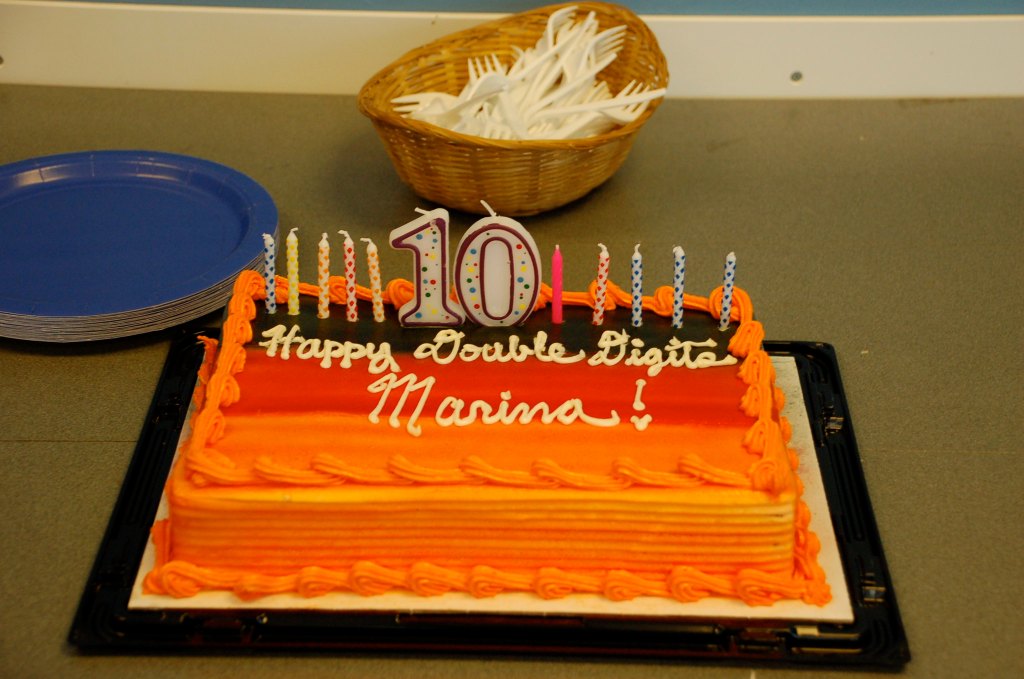
In retrospect, I can see the signs of a budding human geographer in my childhood self. For example, I once found a teddy bear at the Salvation Army dressed in a German military uniform. I had no clue what political context that little bear represented, but I bought it and took it home to my grandpa. The intention was to show that I know where he is from, I care about his culture, and therefore I care about him. On a different occasion, I went to the length of getting the German flag airbrushed on my 10th birthday cake. What did I proclaim out loud to a group of kids in the Science World party room? “My Papa is from Germany!”.
His German-born influence is notable in my life. The food, preparedness, and attention to detail is definitely instilled in us. Even when it came to learning English, Papa influenced me. I’m pretty sure he’s the reason I didn’t develop a lisp as a child, because he’d regularly (and kindly) correct how I said S’s. The Finnish culture was also a big part of my upbringing, even now. Although I do not speak Finnish, our close relatives have Finnish names. We also grew up making Finnish recipes, now a task that my sister and I have taken on at holiday times. When I moved into my first apartment, she made an effort to bring me a loaf of bread and salt as a welcoming gift – apparently a Finnish tradition. Lastly, their stories helped shape my perception of cultures as well. They’d tell me about their travels to Germany, which they took regularly. River cruises, extravagant dinner parties, and visits with old friends and family.
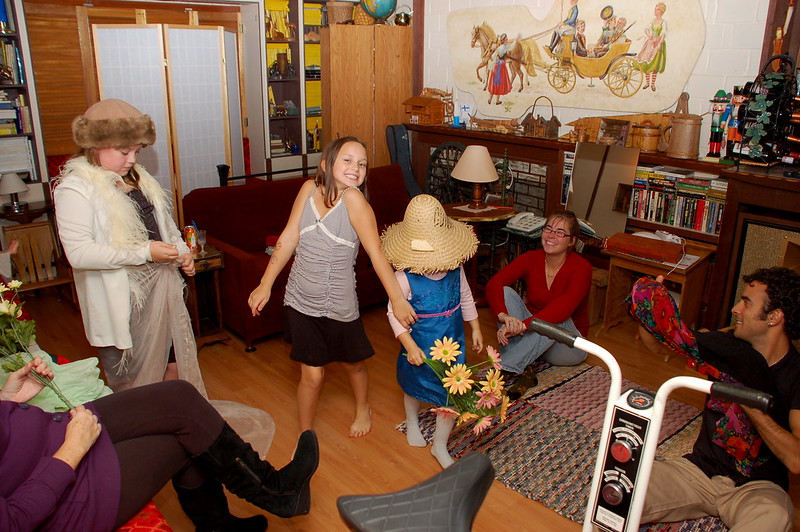
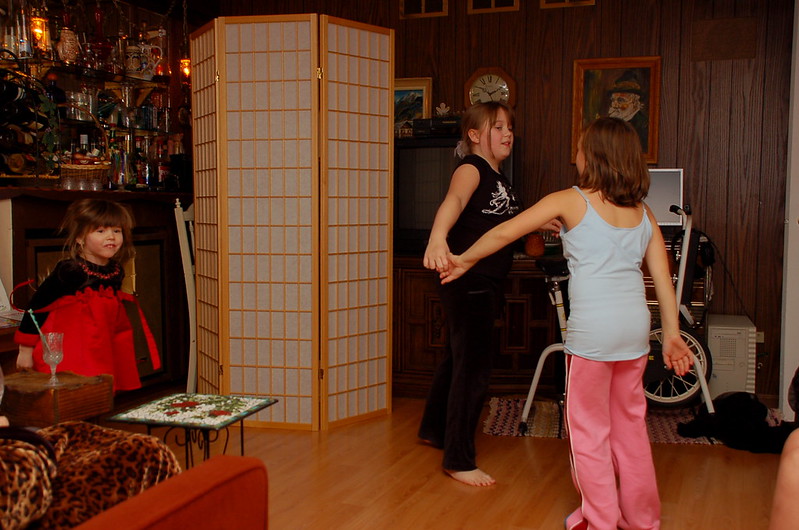
I grew up in a duplex next to Mimi and Papa, where they and the rest of my family still live. It is a multi-generational home with clear European influence in the built environment. Their house is full of cultural materials and design, most notably in the basement. I will probably write about the infamous rec room another time, but all I need to say is that my formative years of fun and creativity were shaped in a room that is essentially a Finnish house mixed with a 70s discotheque. The photos really say it all.
My other granddad is a Scot who came to Canada as a teenager. Similar to Papa, he has lost his accent, but can bring it out at any time – especially when making a joke or singing a song. The Scottish humour is noticeable on this side.
I am grateful that Nanny and Ralph showed me how to tie my shoes, use cutlery, do arts and crafts, and recorded lots of British comedies on VHS for us (this is a particularly vivid memory).
My Nanny’s parents were Scottish and Polish. There is very little Polish culture that I remember learning about – I think in both Nan and Granddad, there is a grey area of influence between born-European and Canadian-British cultures. It is hard to say where their nuances come from, but that doesn’t matter much at the end of the day.
Language is one of my favourite parts of culture. For my mom’s side, this means saying “supper” instead of dinner, “having a lie-down” instead of a nap, or saying “chesterfield” instead of couch. The only word that sticks in my daily vocabulary is “shite”, to be honest. For some fun linguistics, I recommend checking out this awesome YouTube channel.
I have been a smartass talkative since I graced this earth, and I am sure some of it comes from my family’s humour. Their willingness to be silly, creative, open-minded, and caring is something I do not take for granted. It makes me me.
Biographies and photographs
Once I got the key names and dates put into my family tree, I wanted to enhance it – really dig into the intrinsic value of storytelling. So, I made the decision to ask my grandparents to share more. Whether over email or in person, I started to ask more holistic questions about them, their parents, aunts, uncles, and cousins. They also shared lots of photos with me, only scratching the surface of their albums.
I never got to know my great-grandparents. Only one was still alive when I was born, Oma, and my memories are very faint. So, I pushed past the discomfort, and asked my grandparents things like:
- What were your parents like? Outgoing? Shy?
- What did they do for a living? What were their interests?
- What sort of parent were they? Strict? Lenient? Reserved? What do you remember about growing up?
I repeated at many points that if they felt uncomfortable talking about literally anything, that they did not have to continue. One relative was honest with me, saying it was too painful to discuss their parents. I respect this so much, especially being someone who has experienced losing a parent. No matter if you are 15 or 60, it is always difficult.
The responses I received from my various family members, and particularly my grandparents, were profound. It feels like I am getting to know them in a new way. Plus, I am ‘meeting’ new people for the first time through their words.
Frank, heartfelt descriptions of loss, childhood, wartime, struggle, but also prosperity, travel, and happiness. My family has been through a whole lot in the last 100 years, during the most developmental period in human history. Talking to your elders is a history lesson you can’t get from a textbook.
The biggest lesson I’ve learned is that all you have to do is ask.
I doubt I am alone within my culture and generation when it comes to privacy. We are told not to ask our elders about certain topics, to not disrespect them or bring up trauma. There is definitely pain in discussing the past, but if you don’t ask, the knowledge may be lost. To me, pushing family history under the rug because it is difficult to talk about is not worth it. Additionally, it may be an inherently Western concept.
A colonial perspective?
Many cultures, such as Coast Salish peoples, have used intricate systems of transferring oral knowledge for thousands of years. Descendants living today often know the role that their distant ancestors played in the community, and still embody the lessons that they taught. They can recount geological and weather events that uprooted villages millennia ago. Certain community members are even given the role of holding certain knowledge, using mnemonic devices from childhood to protect and pass it on. I have taken inspiration from these ideas during my own journey; I am essentially creating oral and written family histories of my own.
As I am documenting my family tree, I am consciously sitting in the emotions of talking to my family. Of course, as a settler I could never understand the intricate and sacred systems used by Indigenous peoples. I acknowledge and greatly admire their diverse systems of transferring knowledge through the generations. One of my intentions now, as I continue my work, is to challenge colonial narratives by seeking and validating oral knowledge, rather than putting so much weight written records.
Here are some sources I recommend you check out that discuss Indigenous oral traditions, if you are interested.
- McMillan, Alan, D. and Ian Hutchinson, 2002, When Mountain Dwarfs Danced: Aboriginal Traditions of Paleoseismic Events along the Cascadia Subduction Zone of Western Northern America. Ethnohistory, Vol. 49, No. 1, pp. 41-68.
- “[Indigenous] oral traditions may have multiple levels of meaning, rather than describing a single set of historic events… [they] ‘are cultural forms that organize perceptions about the world’ and are not merely vehicles for historical facts” (p. 44).
- Cruikshank, Julie, 2001, Glaciers and Climate Change: Perspectives from Oral Tradition. Arctic, Vol. 54, No. 4, pp. 377-393.
- Knowledge Keepers documentary series from MOA UBC
If you ever find yourself doing ancestry research, try to talk to people rather than simply relying on physical records from online databases or libraries. Have those tough conversations, and I guarantee you will learn more than you would from records.
Even though conversations in person are the most valuable part for me, I have enjoyed finding military draft sheets, birth, death, and marriage certificates, and a ship log through Ellis Island in the early 1900s. The ancestry website I use opened me up to a world of extra context and confirmation.
Outside of the records sites, I did a free search on Google for some keywords and places related to my ancestors. The most interesting finding: two vintage postcards from my great-grandparent’s restaurant. The infamous Schnitzel Haus of the old Robson Street in Vancouver, at that time called Robsonstrasse, belonged to my dad’s grandparents in the 1960s. I found some online records, like this, but also some actual physical materials. I went ahead and bought two cards from eBay, and of course my grandma, as grandmas do, insisted on paying me back the $6 I paid!
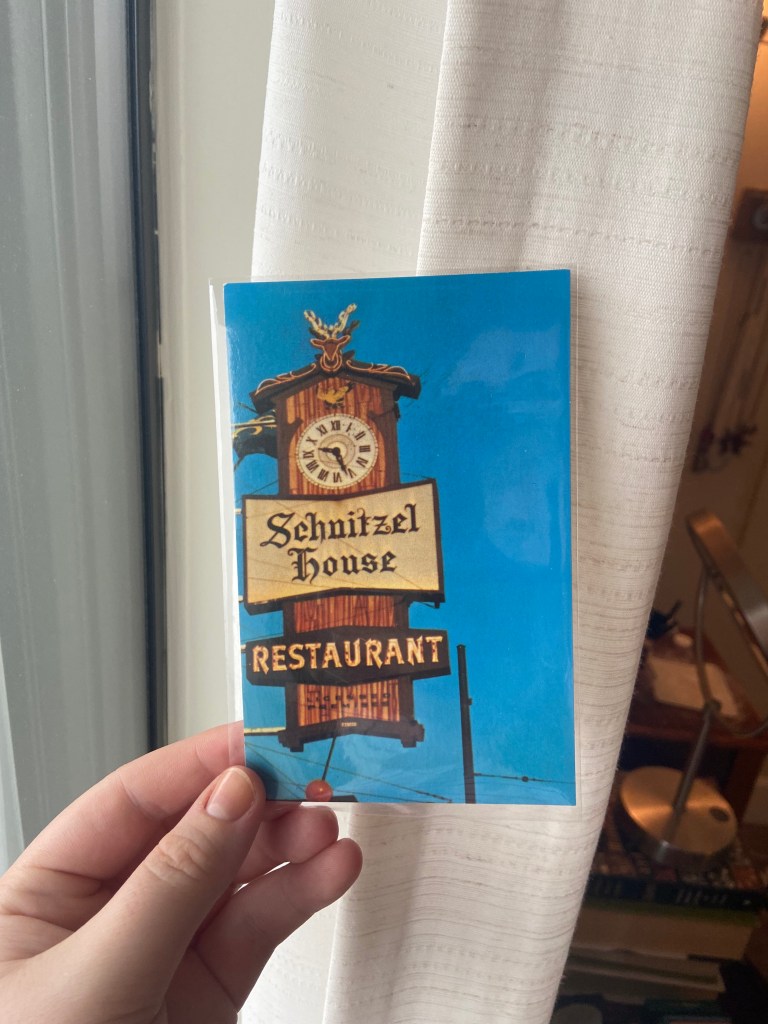
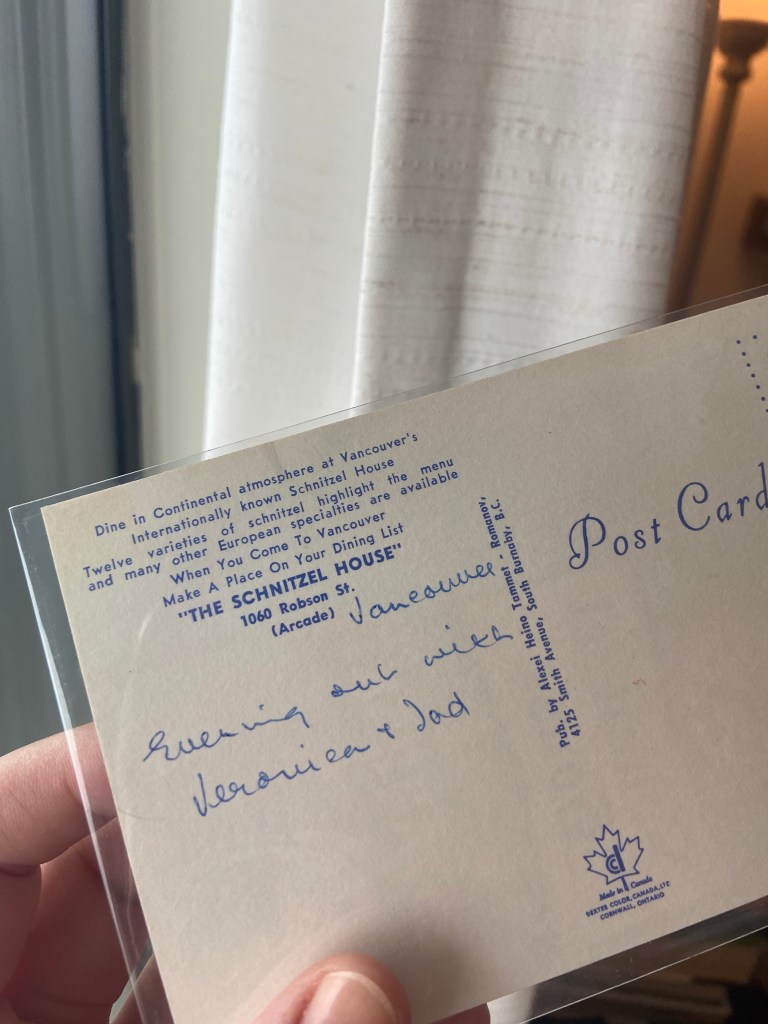
By chance, I uncovered that the man who they hired to take the photo and print the cards claimed to be the last remaining Romanov of Russia… royalty in Burnaby, oh my!
My first tattoo
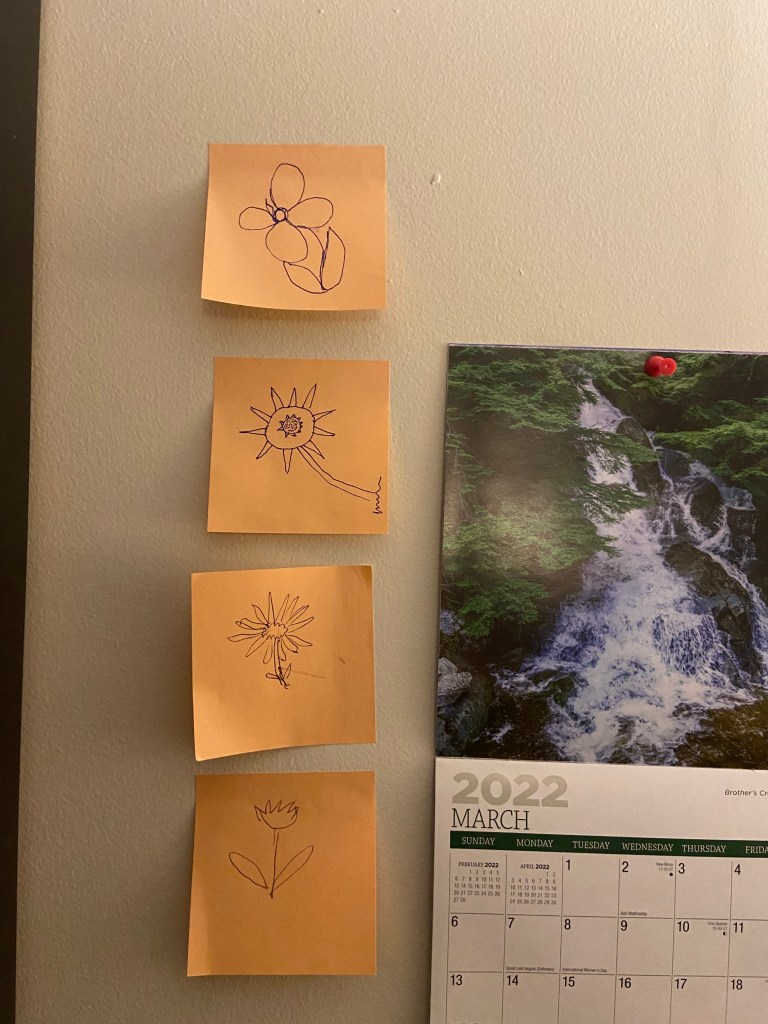
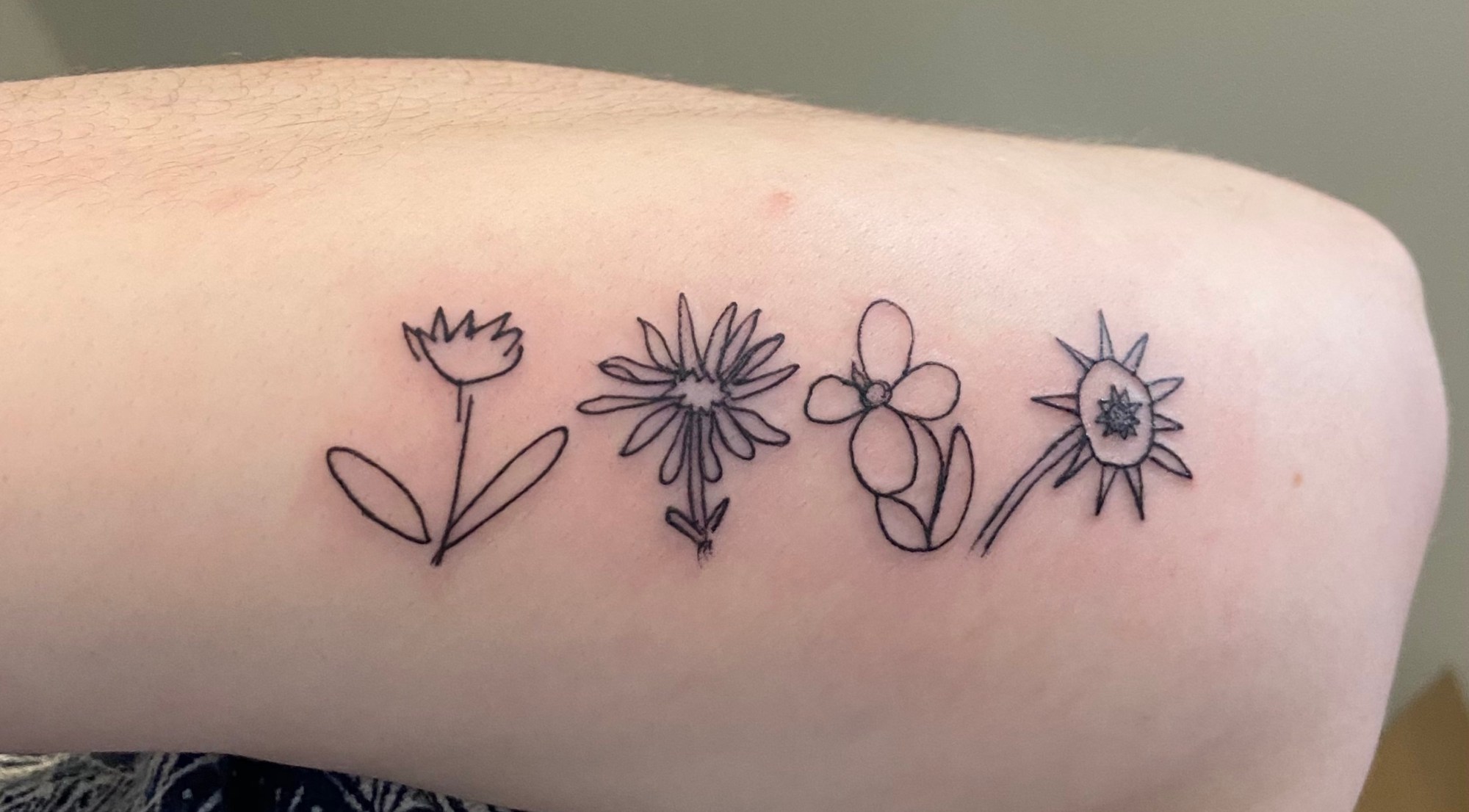
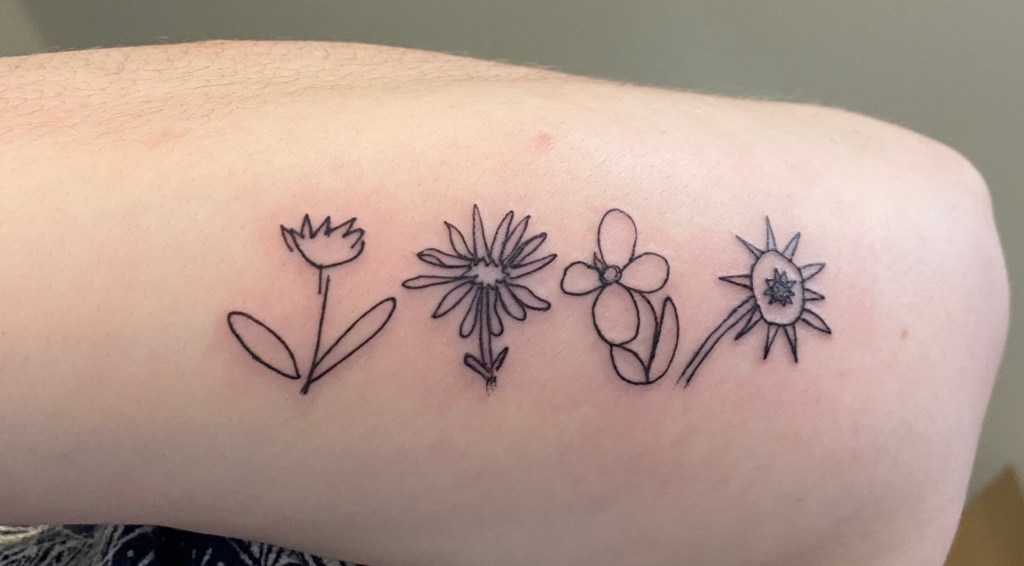
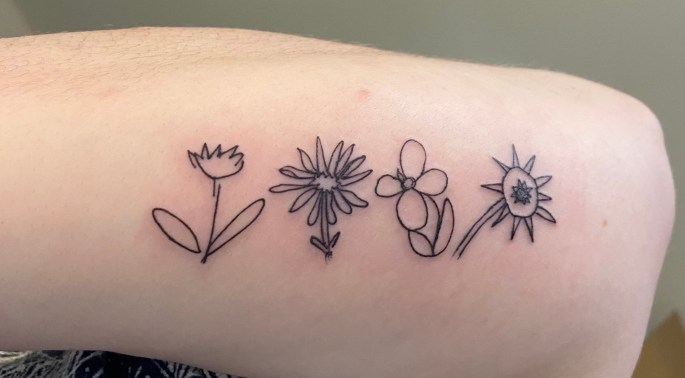
A few months ago I was inspired by this TikTok to have each of my grandparents draw a flower, with no context. Once I collected all four stickie notes with the cutest little drawings ever, my sister traced them out on her iPad.
We brought this to the talented NP.ink, and she put it on both of our arms. Although this is mainly for Mer and i, it is also a love letter to our grandparents. To honour them and to have a token of their beauty forever. They were content with the decision, although there was some confusion about them being permanent on our skin! I am proud to have these drawings on my arm. Any time I want to ‘see’ my grandparents for the rest of my life, all I need to do is hold up my arm.
Material culture
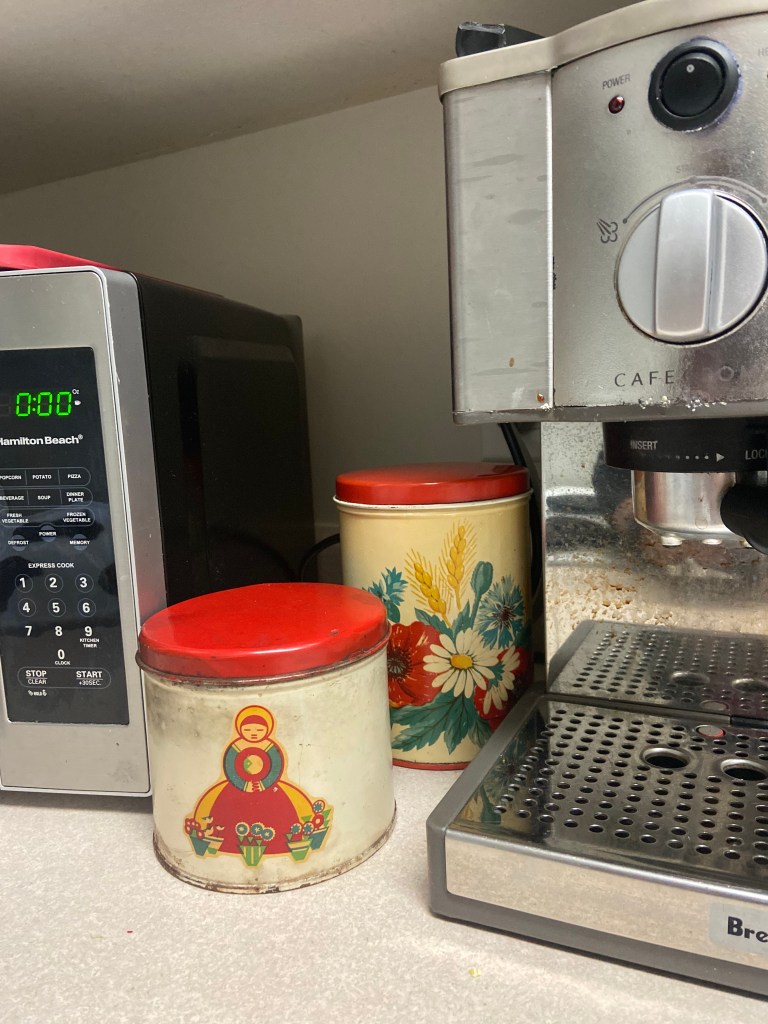
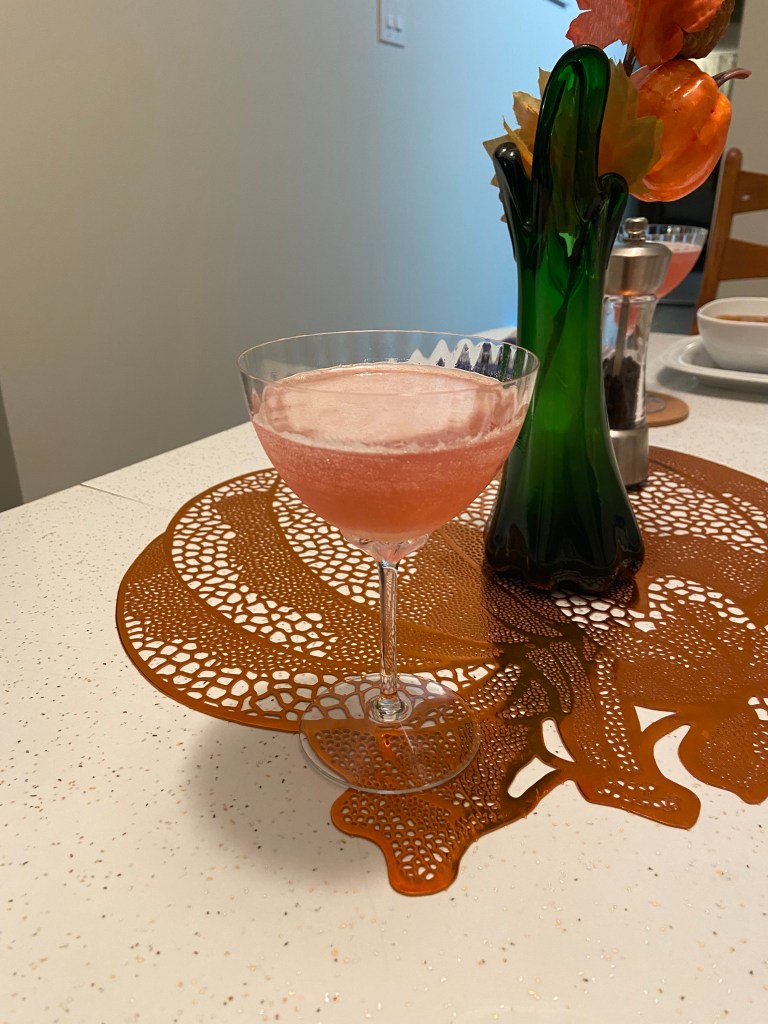
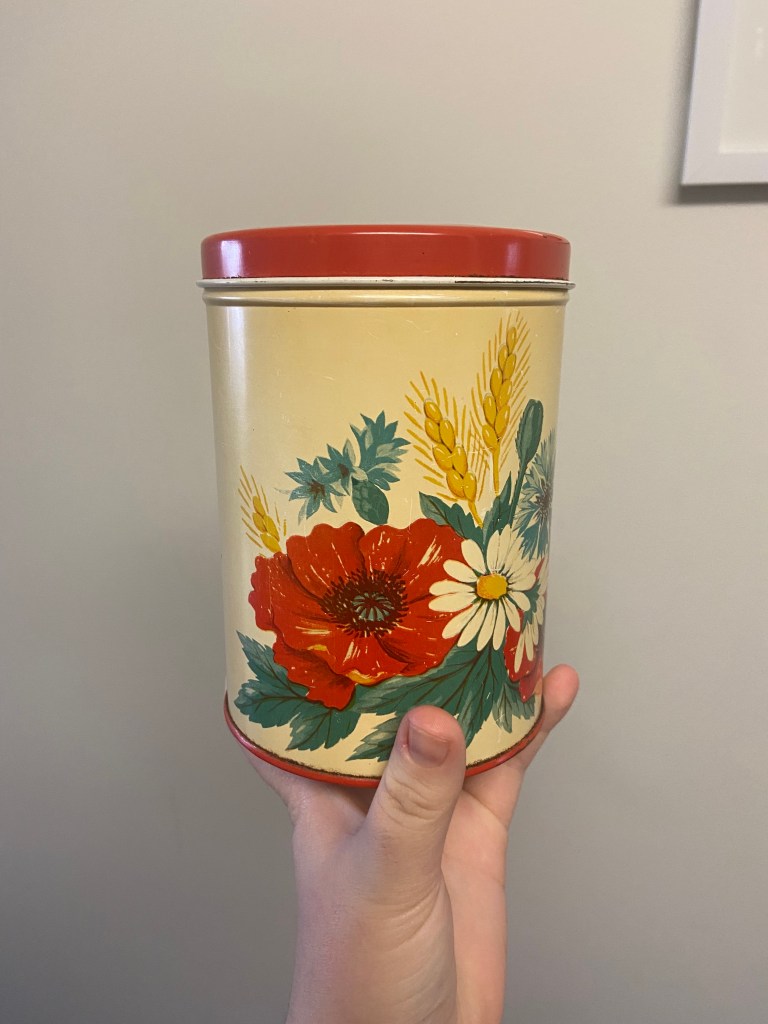
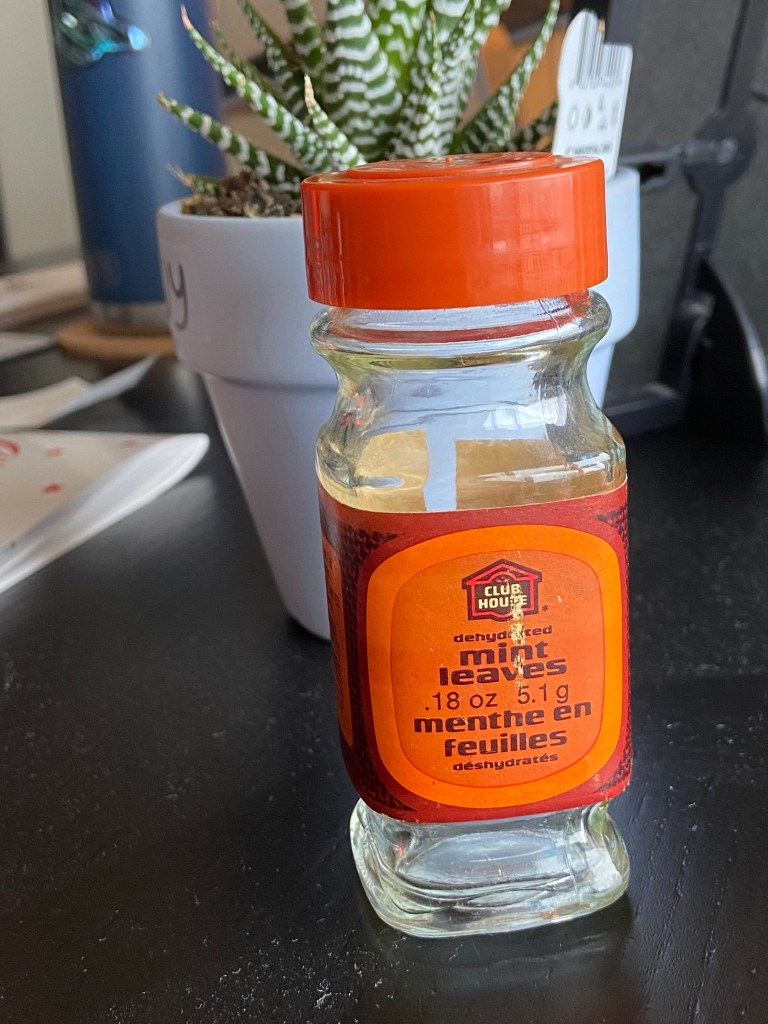
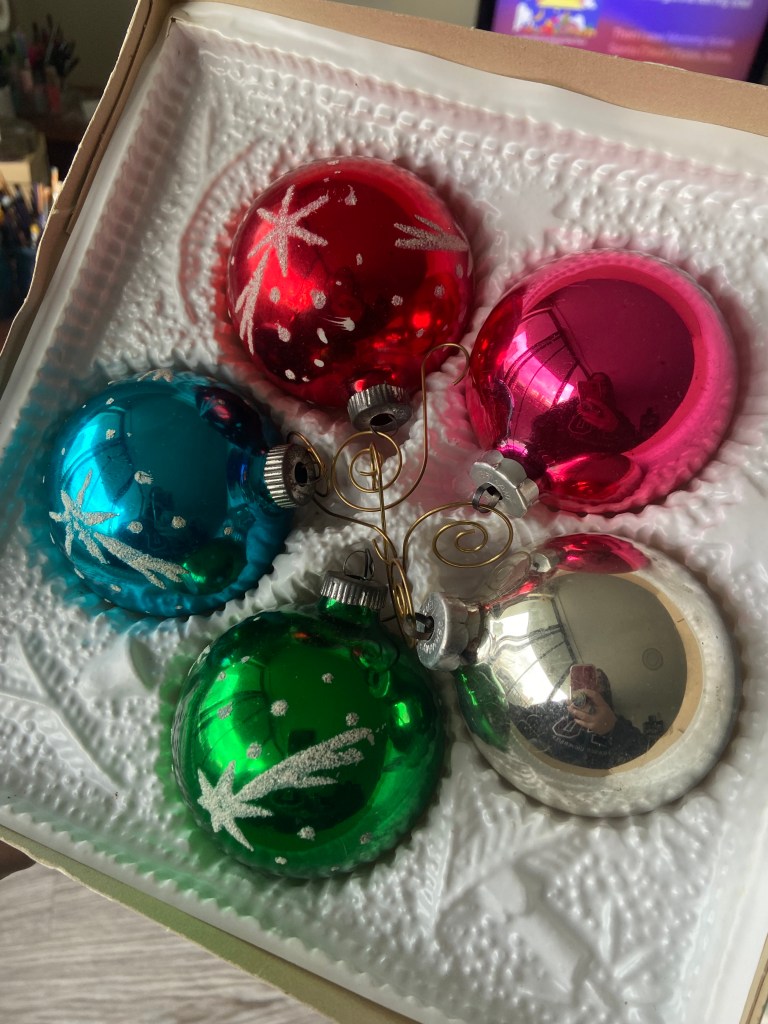
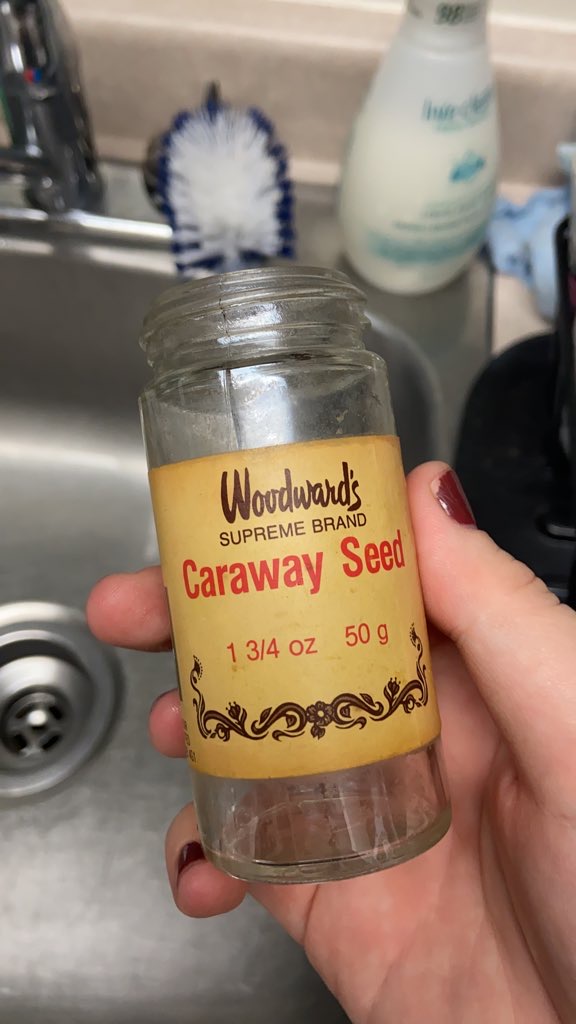
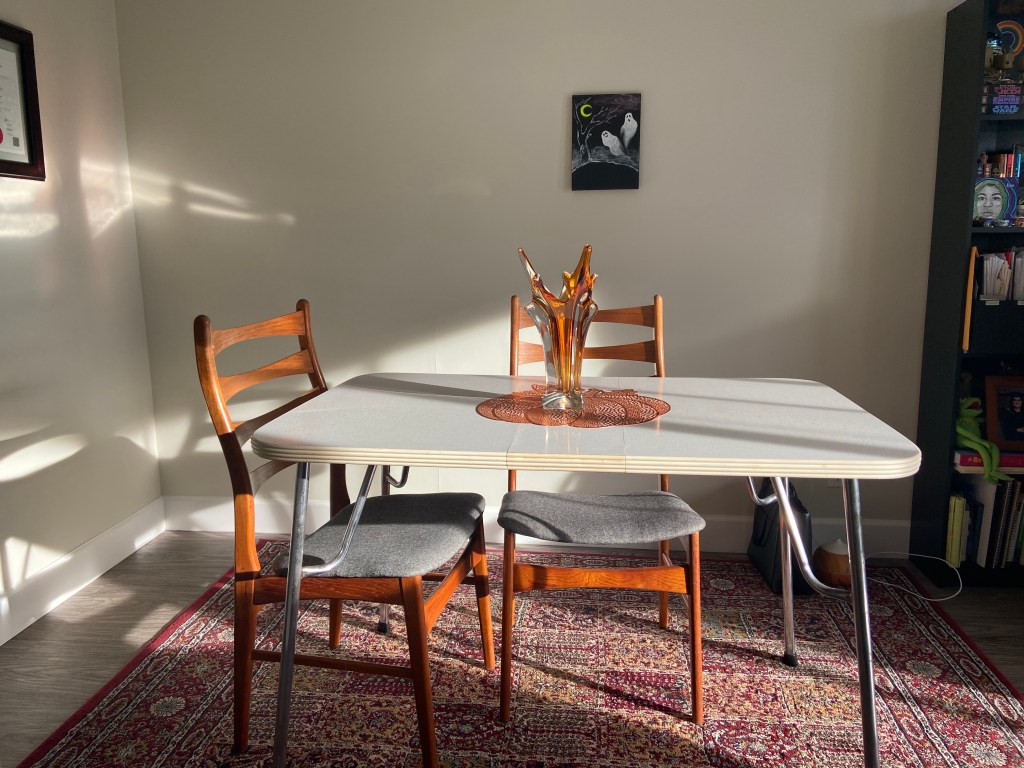
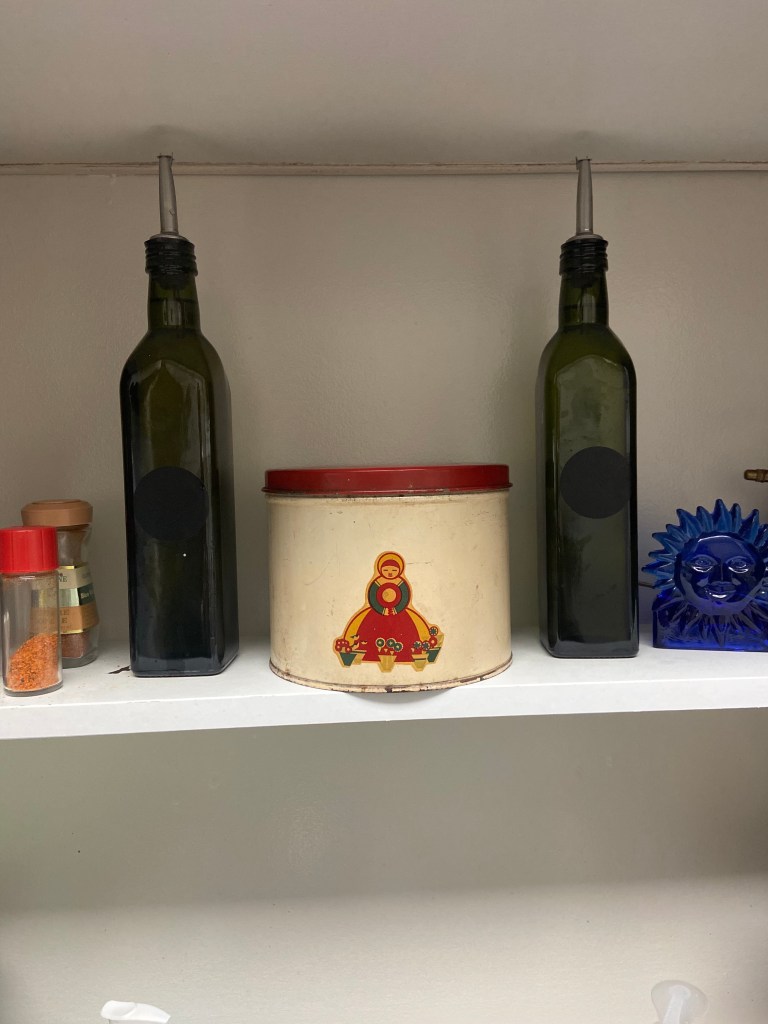
During this journey, I have gotten closer to my family through objects. I recently moved out on my own, and Mimi generously set me up with enough kitchen supplies to keep me going for years. I am utterly grateful for that.
A positive externality of getting these hand-me-downs is that I get to own things that already have stories and sentimental value behind them. I’ve gotten some beautiful vintage glassware, tins, and plates which compliment – and contribute to – my ideal MCM aesthetic.
Here are a few special items from the women in my life.
An ongoing journey
I think part of why I am writing my ancestry information down now is because I have grown up. I have the confidence and the vocabulary to ask certain questions. Plus, I have the extreme privilege to still have four living grandparents. There are other factors too: interest, nostalgia, legacy, and free time. No matter the reasons, I am satisfied by my progress.
Some of my grandparents have continued to think about their lives and write things down for me, so that will come my way occasionally. Every new story I receive is a gift.
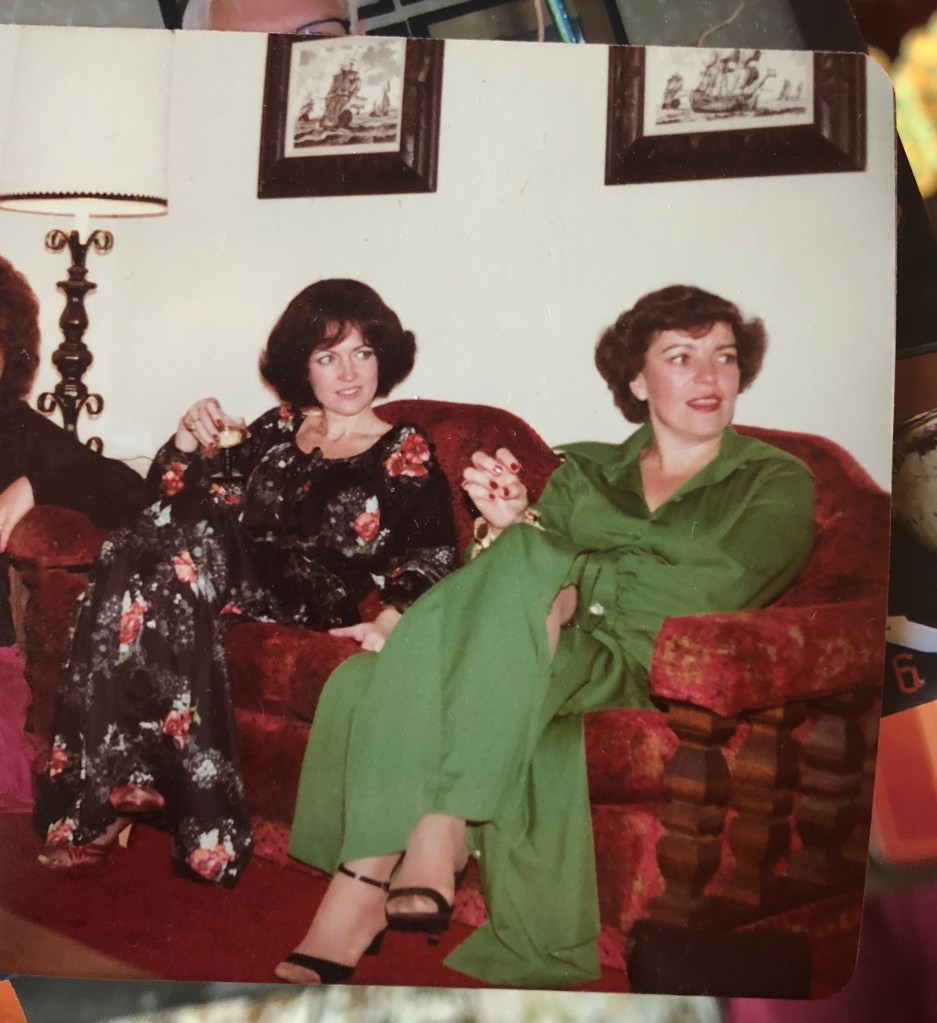
Unless we face a Station Eleven-esque apocalypse where the internet no longer exists, then the work I have done is permanent, and I can keep building on it. Databases will continue to improve. More extended family will do research and may find me. My potential descendants will have a priceless digital chronicle of their lineage at their fingertips. It is no longer boxes of photos, crumpled documents, or scribbled notepads.
It is important to mention that it’s impossible to get it all 100% correct. Names, jobs, houses, and dates are sometimes incorrect or misinterpreted. Humans are notorious for having bad memories when it comes to the details, so I am sure there are errors in my tree I may never reconcile. I do not accept everything I have found as fact, but the themes and patterns I have discovered are part of my truth.
What’s next? I hope to make my way to Europe and visit a few of the places my family is from. I may spend decades ticking them off my list, and that is all part of the fun.
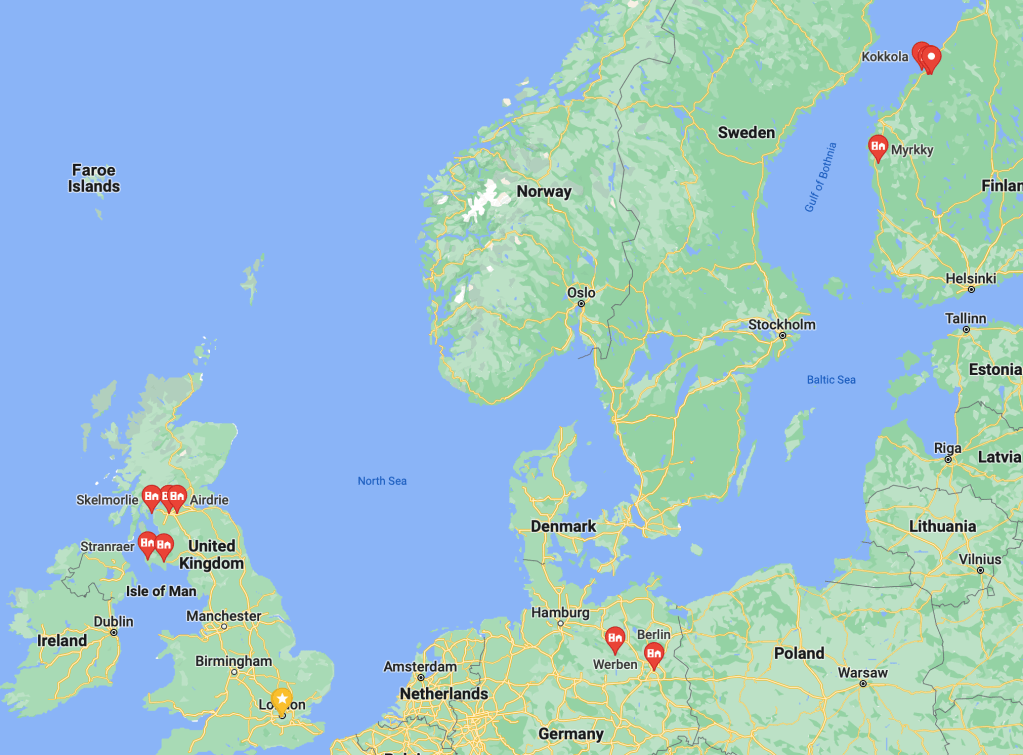
The process of getting to know my ancestors will keep me occupied, potentially for decades. It is a dynamic experience that I define, and may become a cornerstone of how I understand myself and the circle of life.
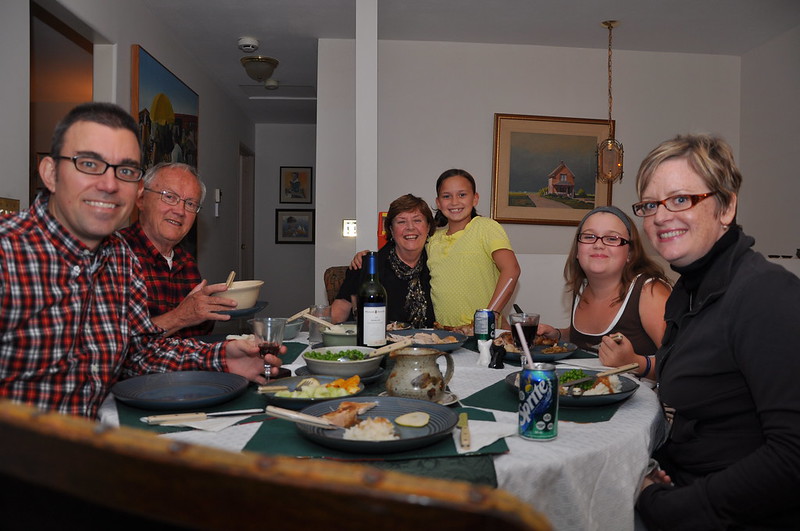
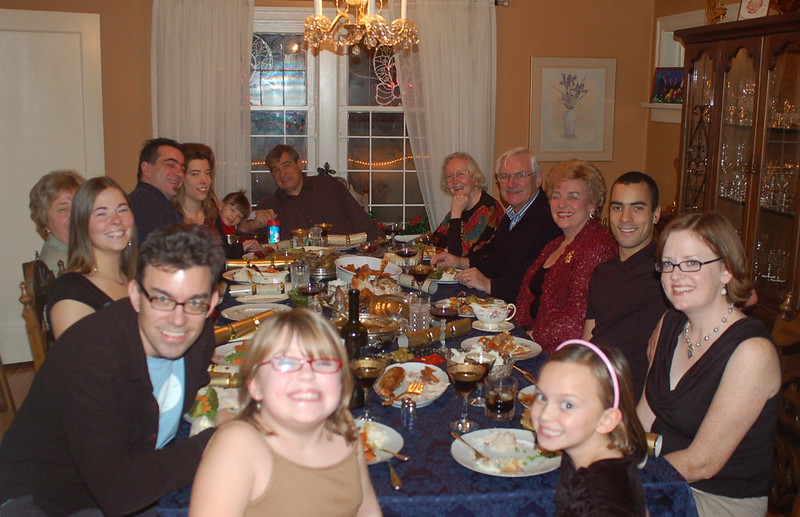
—
I love hearing about other people’s journeys, so please drop me a comment letting me know the coolest thing you’ve ever learned about your family.
 marina miller