
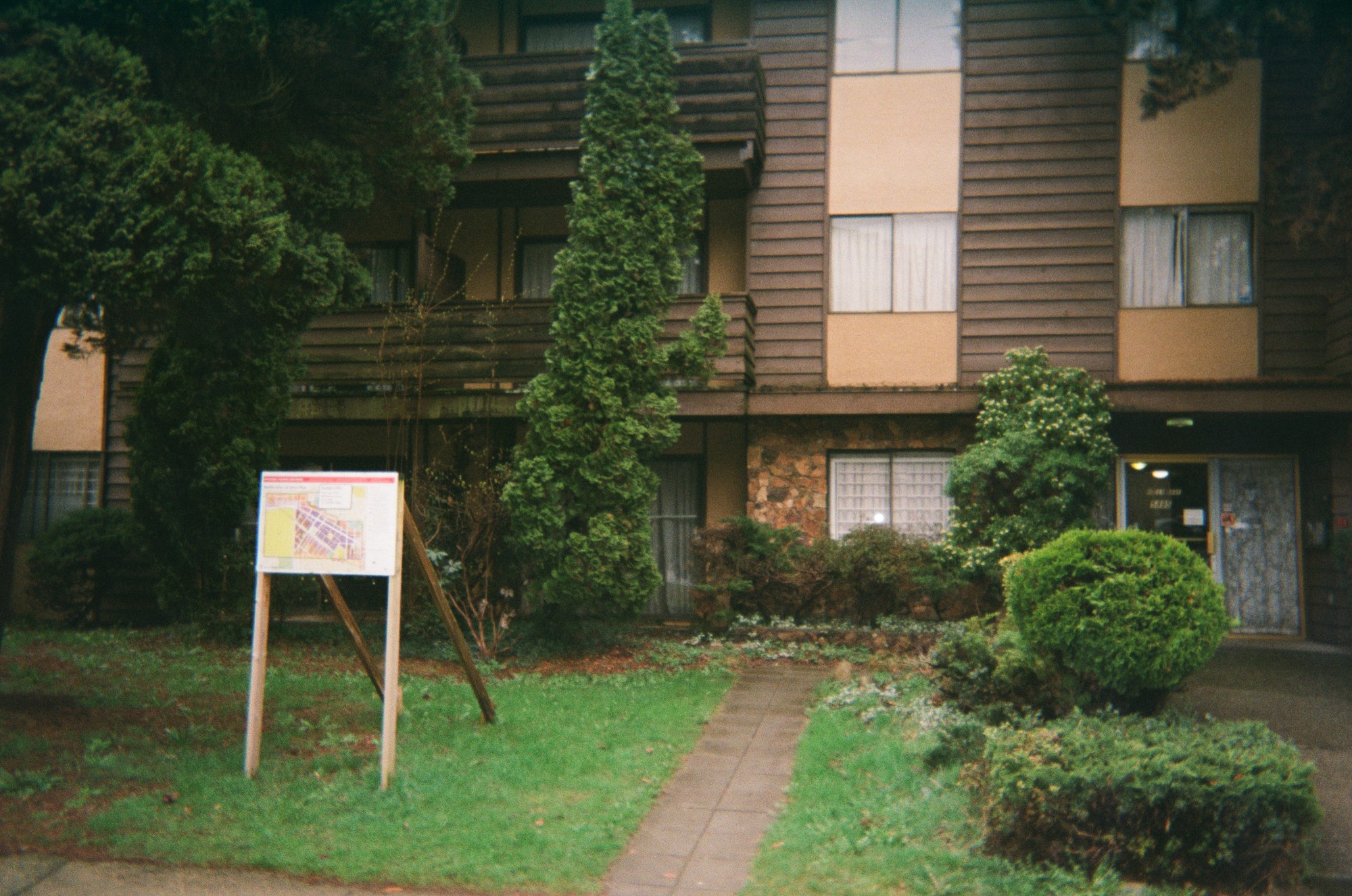
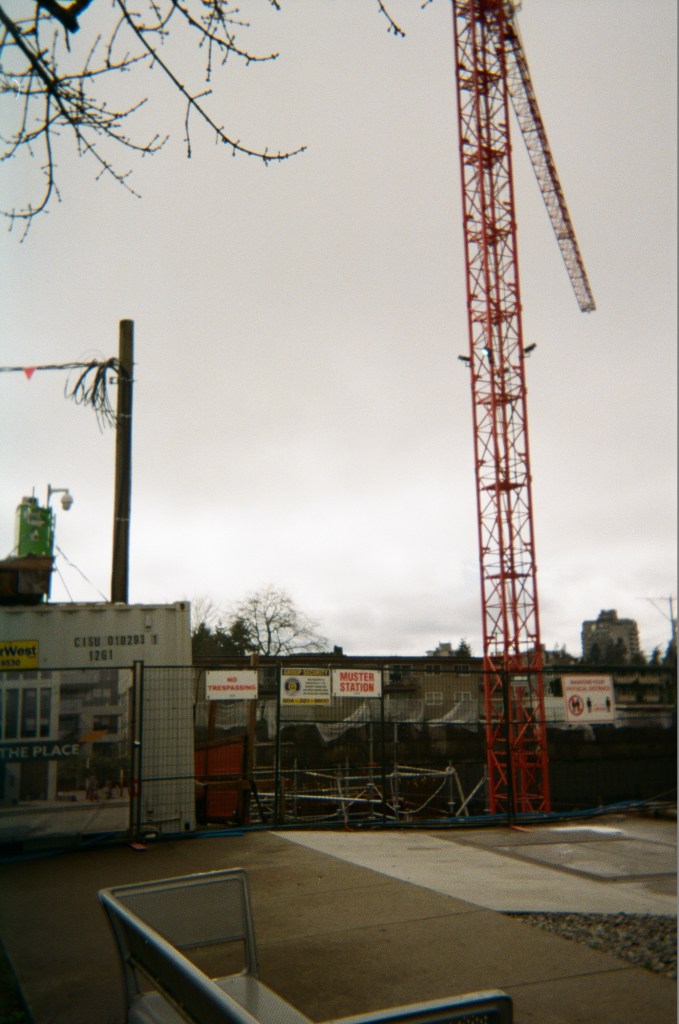
Since moving right up to Kingsway, Metrotown’s changing face is more noticeable than ever. On my walks to the store and the train, I see rezoning signs pop up in front of low-rise rentals, pits, towering cranes, and old bricks scraped away. All this change on my front steps has me thinking about the neighbourhood’s future.
I once took a course called Indigenous Perceptions of Landscape taught by the brilliant Rudy Reimer/Yumks. He challenged us to get outside almost every week and experience our surroundings. We had to get our feet to touch what we were studying, in order to understand it better. This photo essay was inspired and informed by that lesson.
While the rain broke up a couple weeks ago, I walked for a few hours around Metrotown. I went from one end to the other, from top to bottom. I reached backstreets I hadn’t touched in my whole life.
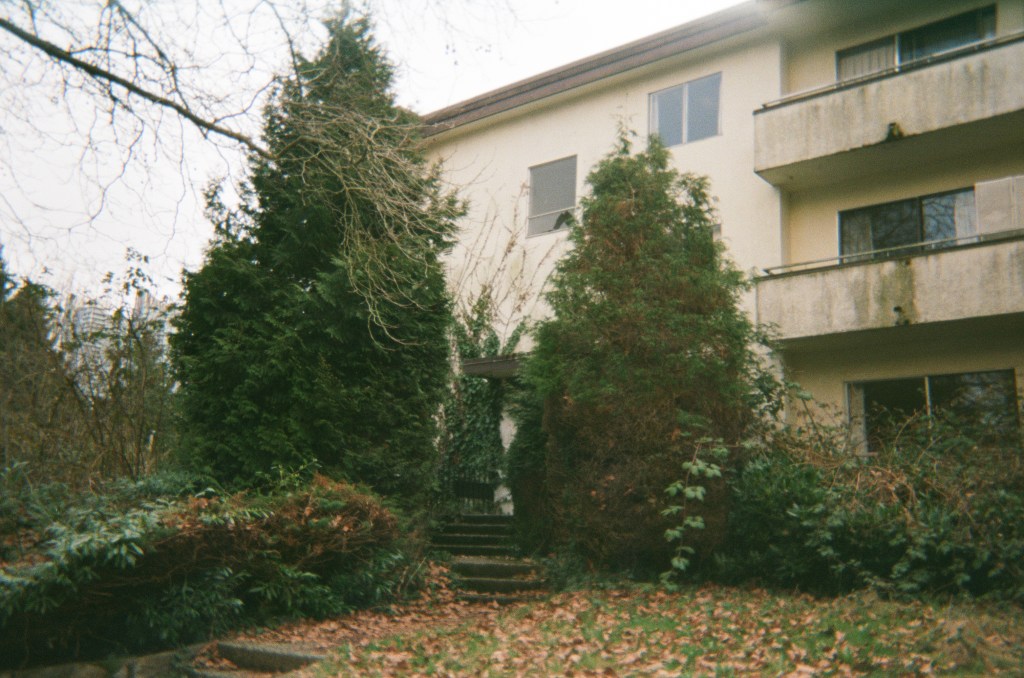
With me, I took a 27-exposure disposable camera. I enjoy how film photos look, plus having a limited number of shots forced me to choose my frames wisely. Although I had a few places jotted down that I wanted to capture, I got a bit lost and found a few more.
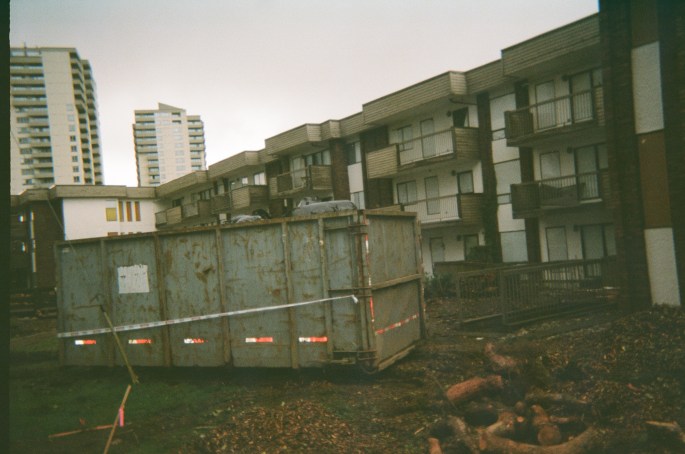
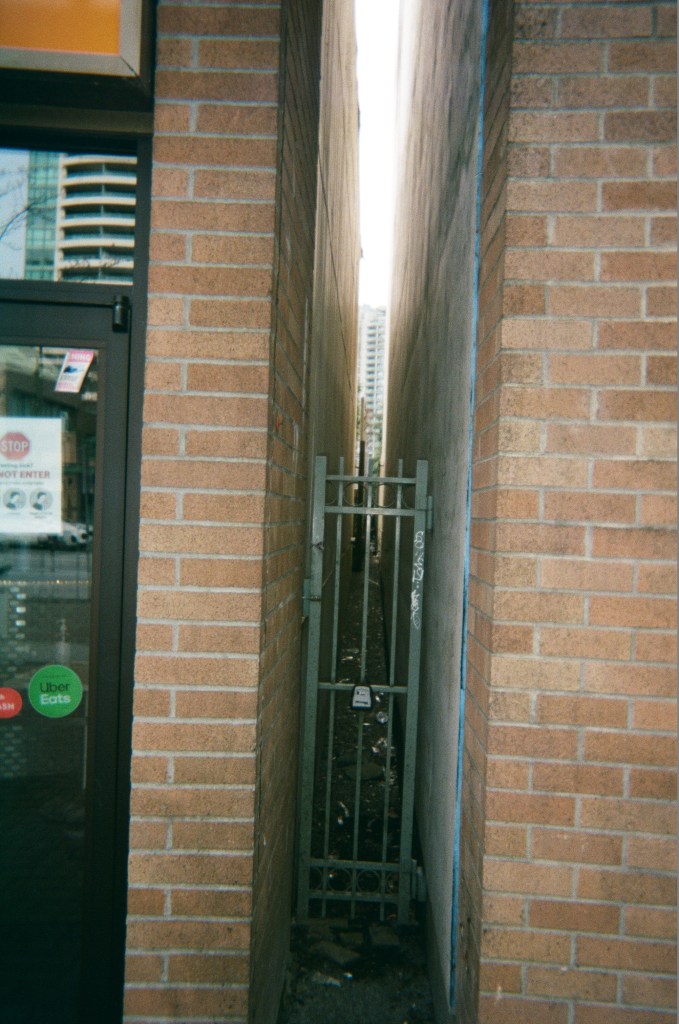
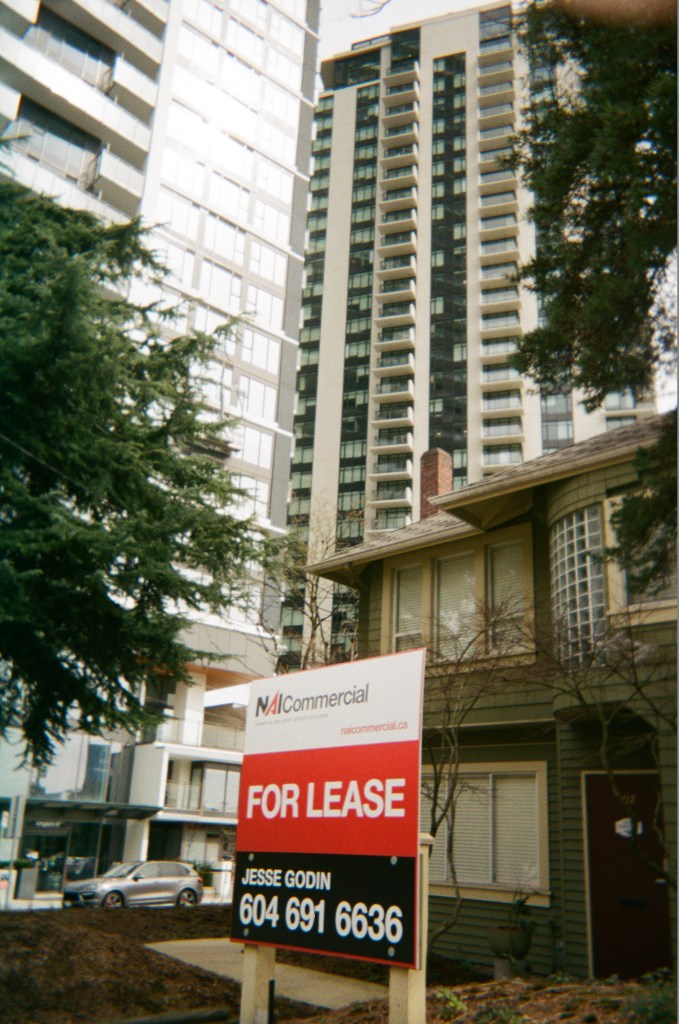
These photos show the half-broken and half-built sides of Metrotown. At the same intersections, decades-old apartments are torn down while glittering new ‘estates’ go up (yes, estates was the word used on a billboard I passed).
I grew up here before the latter really got on its feet. When we were kids, the Rogers towers behind the mall defined the skyline, if you could even call it that.
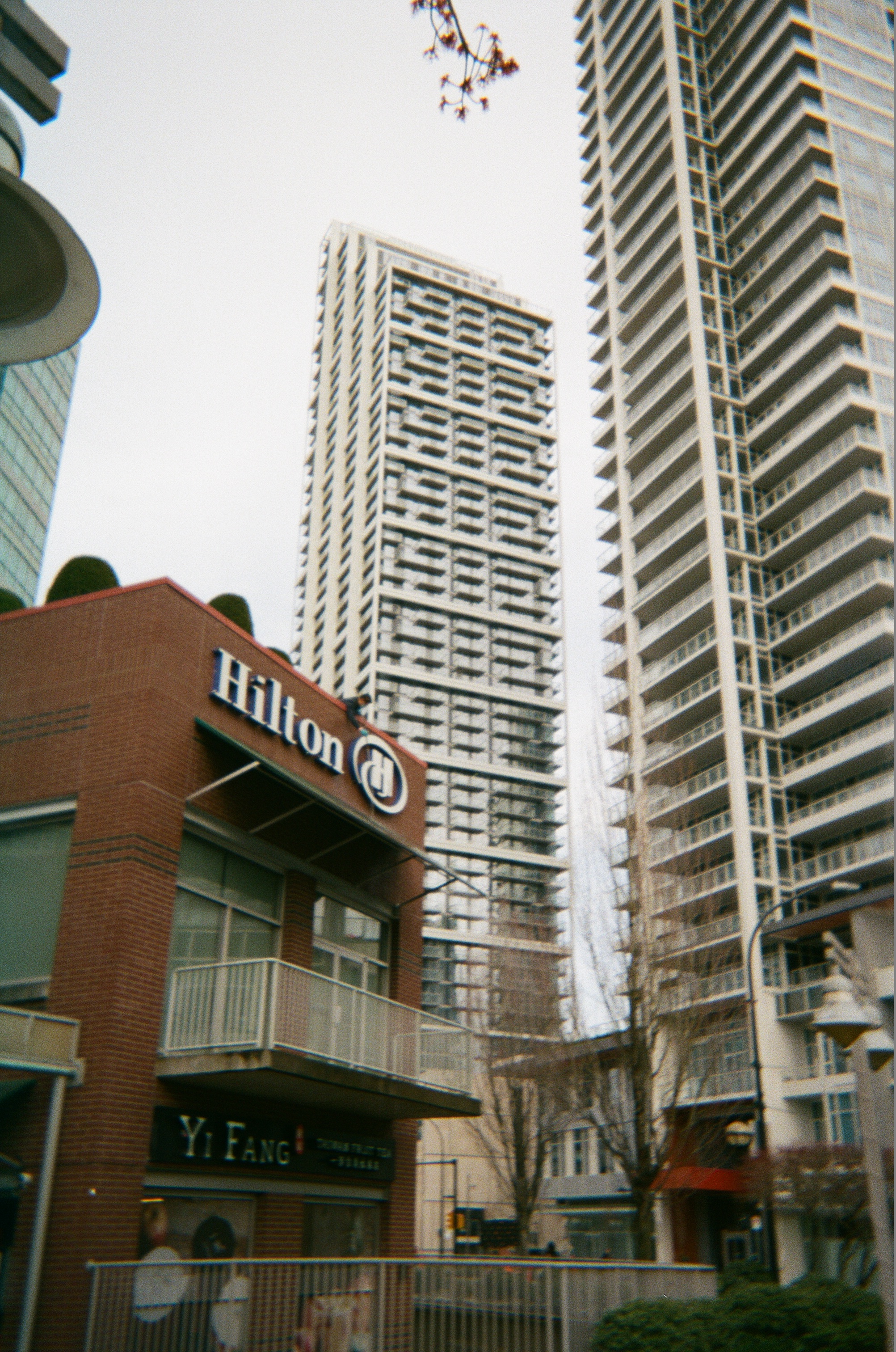
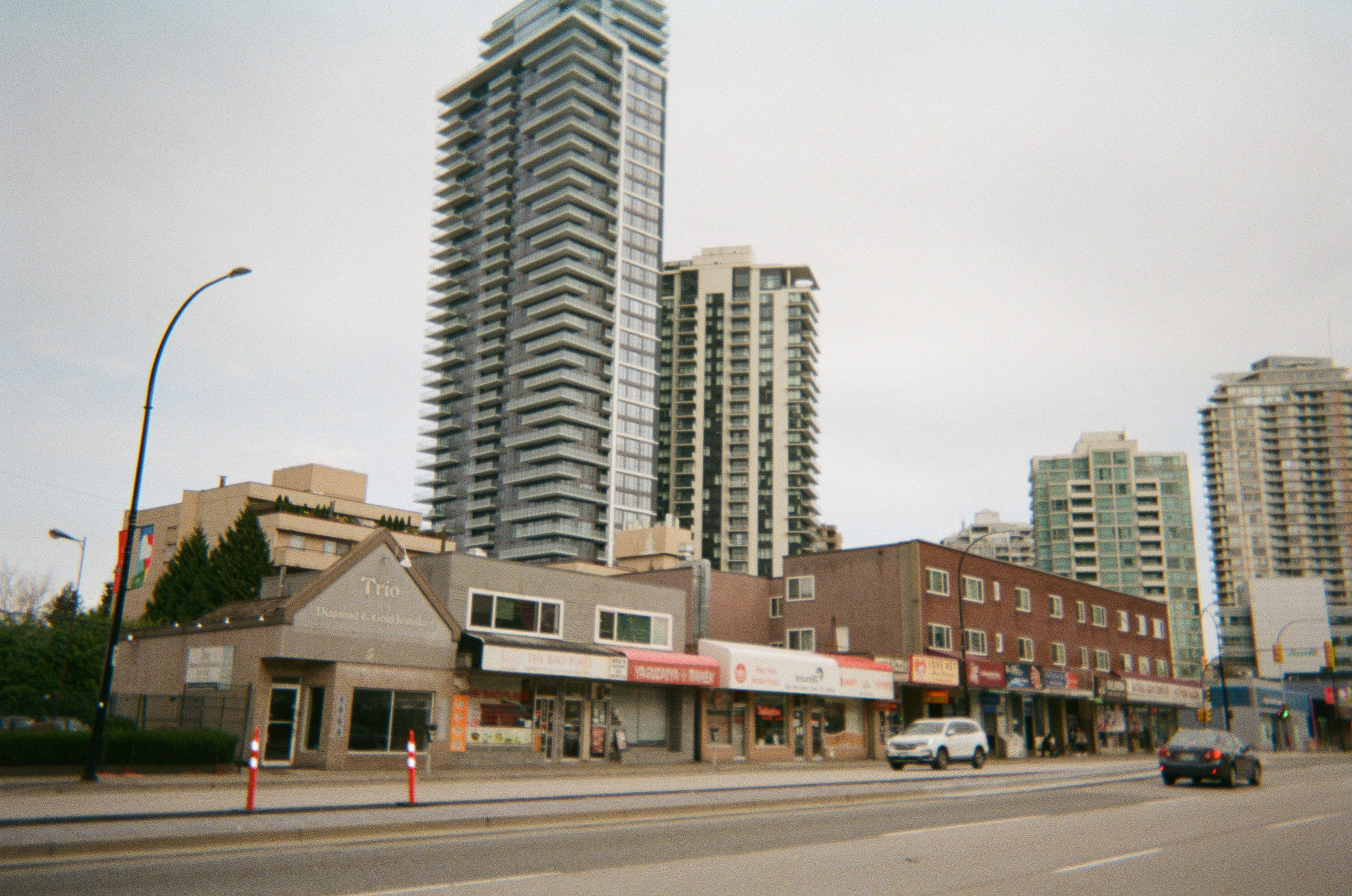
Today, well-defined areas like Station Square, Bonsor/Nelson, and Metrotown Skytrain are bursting with new high rises. Property developers plaster giant billboards with ethereal imagery wherever the find room, to advertise their upcoming projects.
Looking over the developed prints, I felt a duality: sadness for what is being torn down, and hope for a more liveable future in a growing city.
Burnaby’s housing costs have skyrocketed in recent years, especially in the last. Some think that hiking up property taxes could fund enough affordable housing, but others like our mayor don’t think that’s enough.
I agree that tackling the affordable housing crisis needs a focused effort from the all three levels: municipal, provincial, and federal governments. It will take more than one policy, and may take decades to mend.
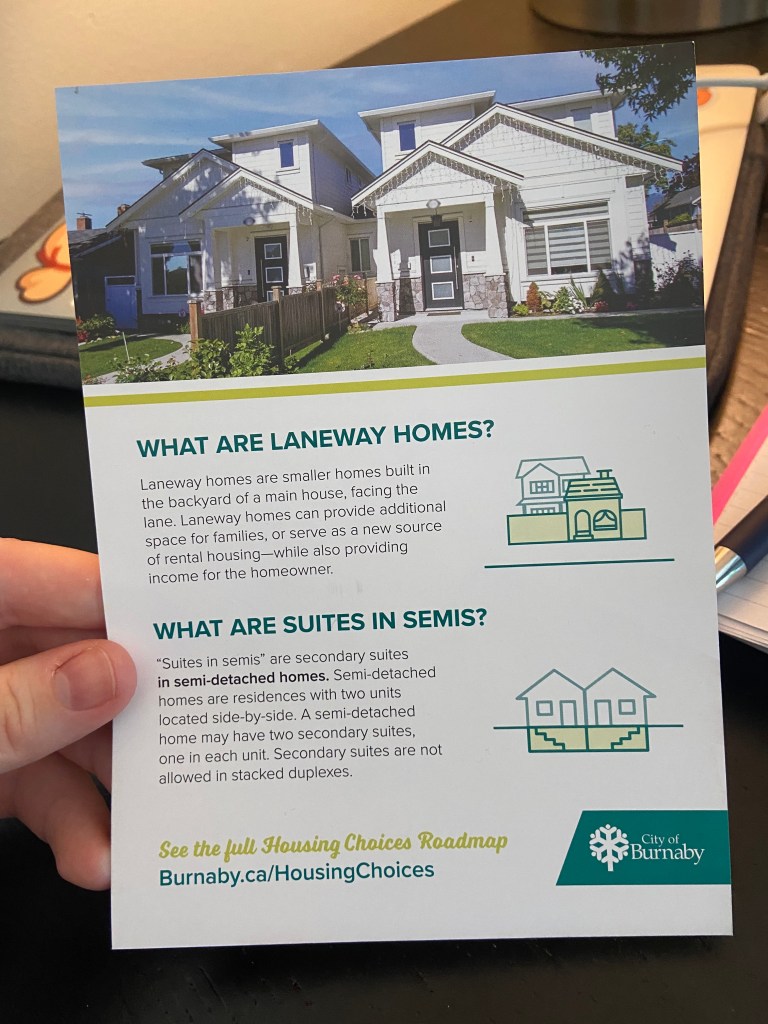
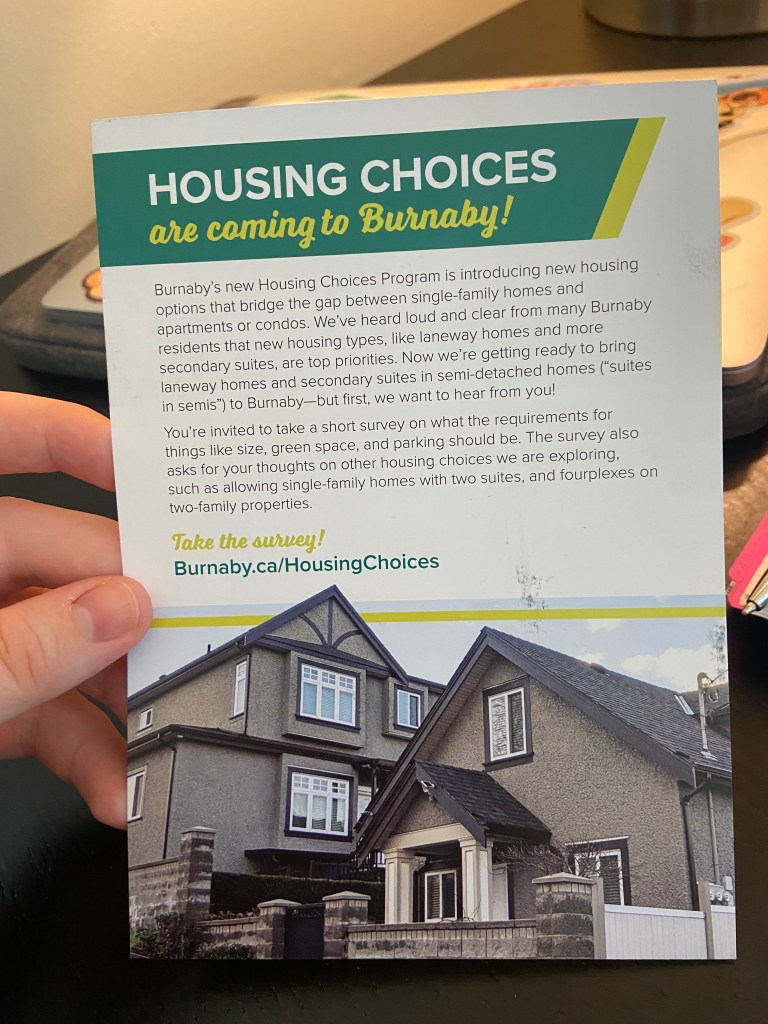
Burnaby is currently trying to fill the missing middle, zoning for and building more multi-unit or alternative housing that fits ‘between’ single family homes and high rises. I got a flyer in the mail the other day advertising a survey on this topic. I am glad to see this moving along, because a thriving neighbourhood should have a mix of housing options.
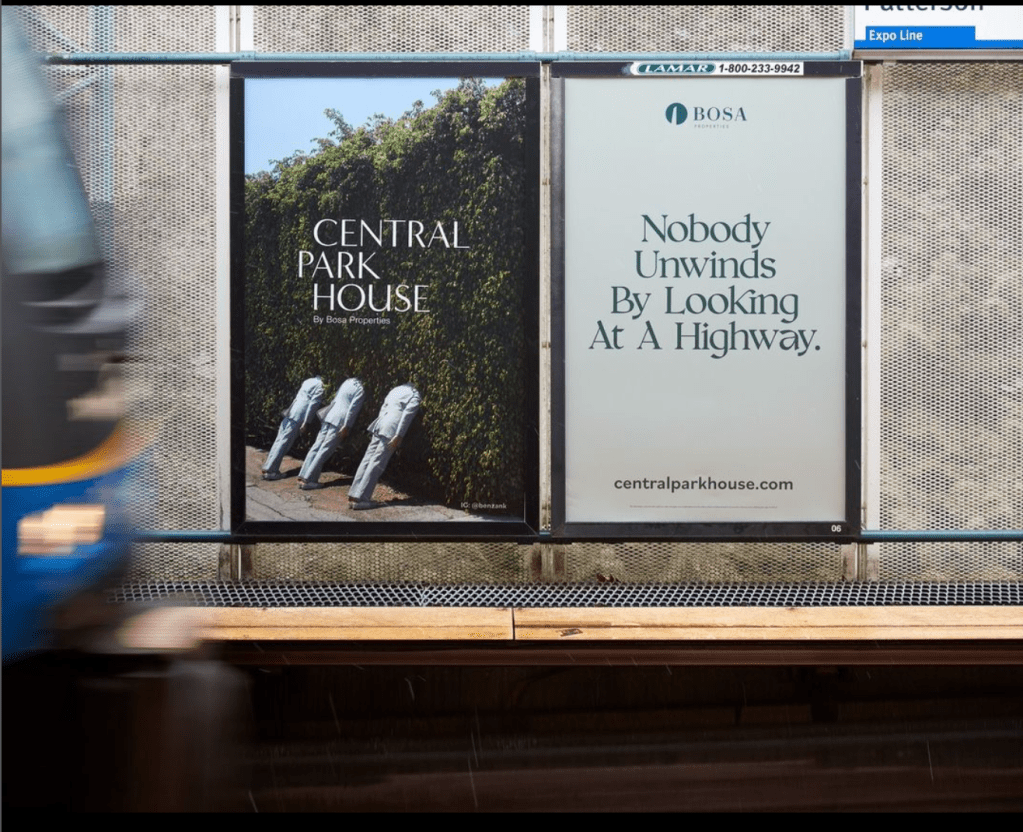
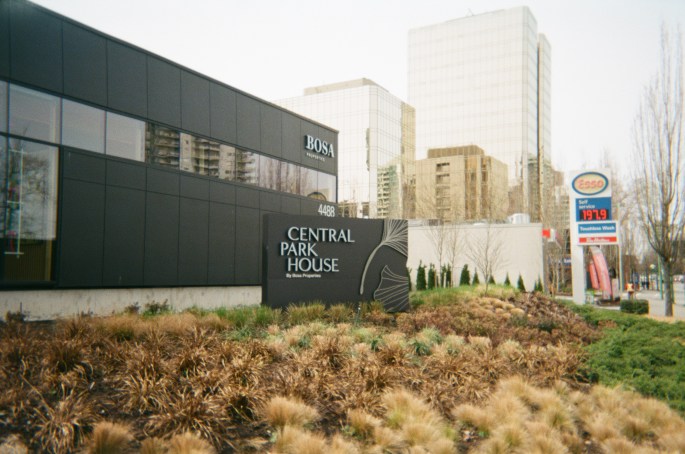
On the more capitalist side of my mail slot, I got a glossy fold-up mailer from Bosa’s Central Park House. Their snazzy show space is just down the block from me. I furrowed my brow realizing they sent mailers to my 50 year old home, a 400-unit complex full of immigrants, young families, seniors, and single professionals like myself. It felt completely tone deaf to get an ad for million dollar condos. Who is going to bite at that when many of us can barely afford rent? It represents the psyche of Metrotown very well.
What truly gave me the ick is this ad campaign at the train station, reading “nobody unwinds while looking at a highway”. Well, actually, plenty do, and have no other option.
There is another development on Willingdon called The Standard. To me, this name tells a story of demoviction for the sake of a more supreme standard of living – one that excludes previous community members.
Burnaby needs a lot more rentals, and fast. But 73% of the city’s land is zoned for single family homes. One of the most radical goals drafted in the new Community Plan is to shift zoning for more rentals.
There are a number of planned non-market housing units for Metrotown, plus many market rental units being reviewed for rezoning nearby. This is good, but the numbers feel pretty low for a city that continues to grow. What is undeniable: the community is in the midst of rapid change.
I will miss the unique character of where I grew up, but much of it is run down and needs redevelopment. Though, I fear Metrotown will never feel as warm again, because housing has becomes less equitable.
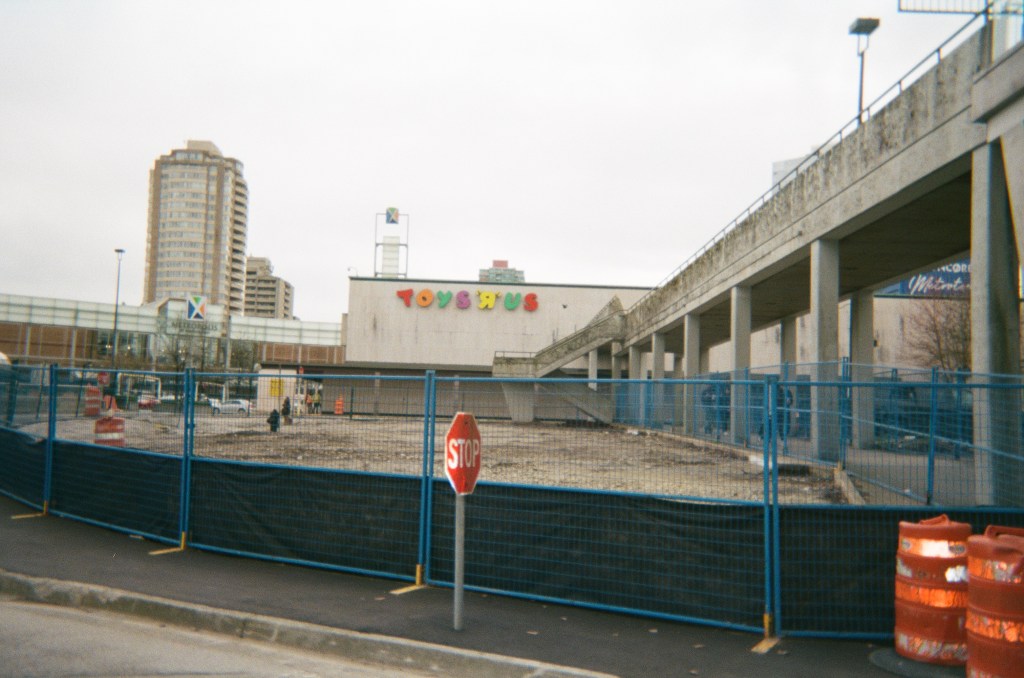
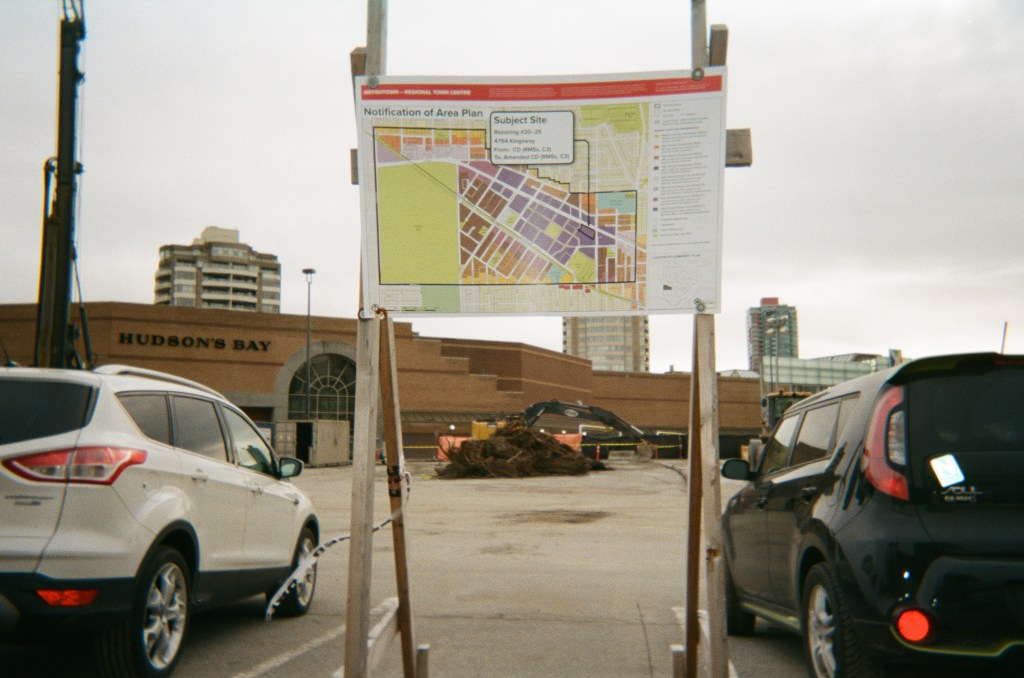
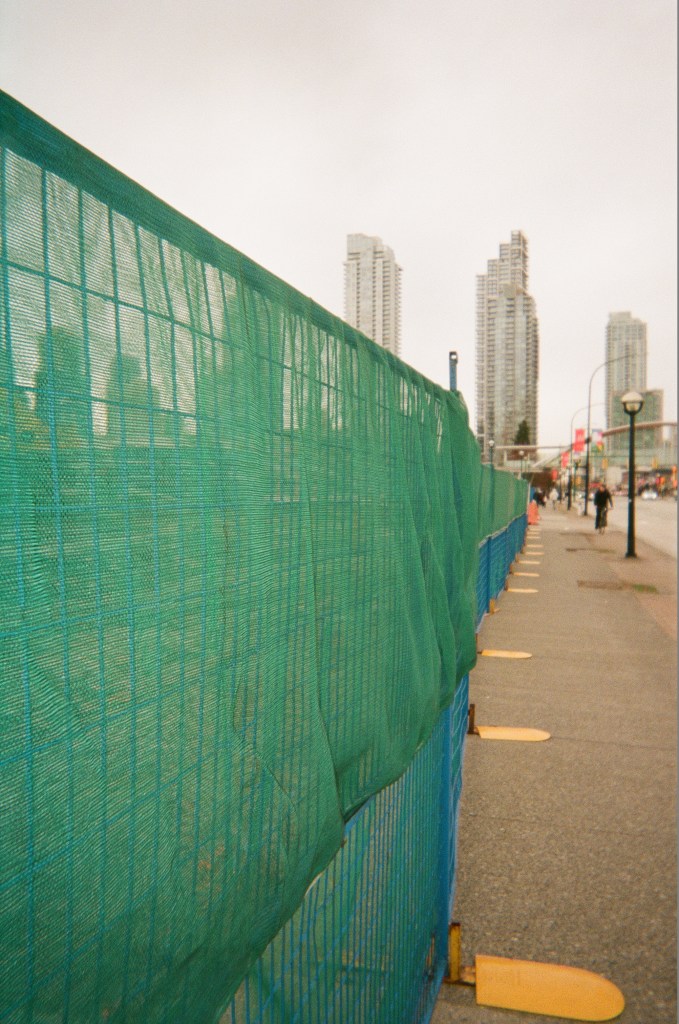
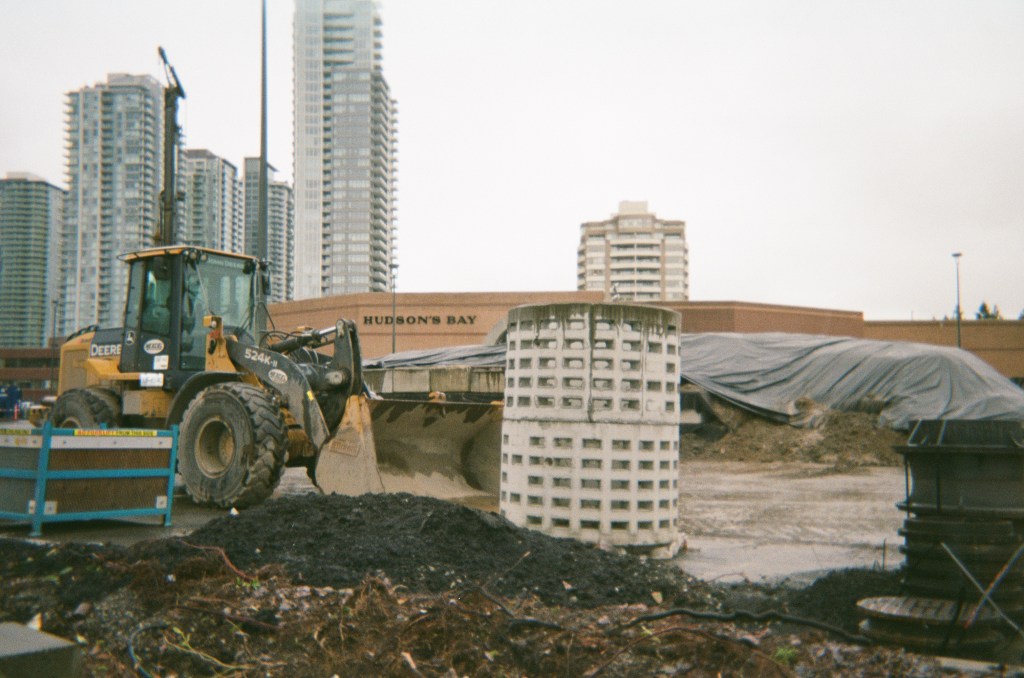
Major development in what used to be The Bay’s parking lot.
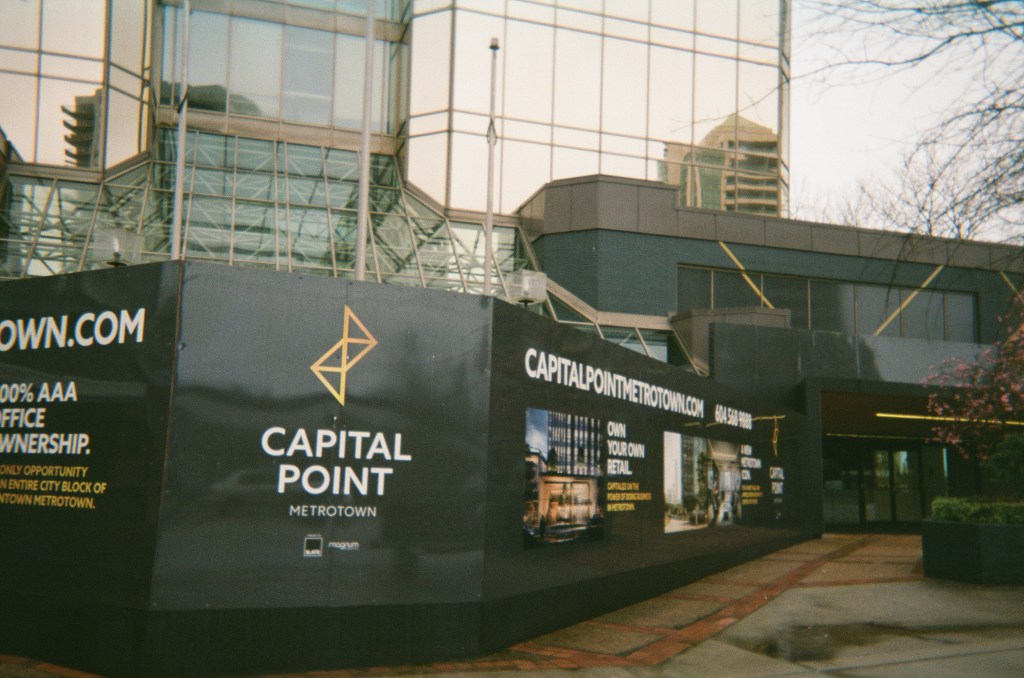
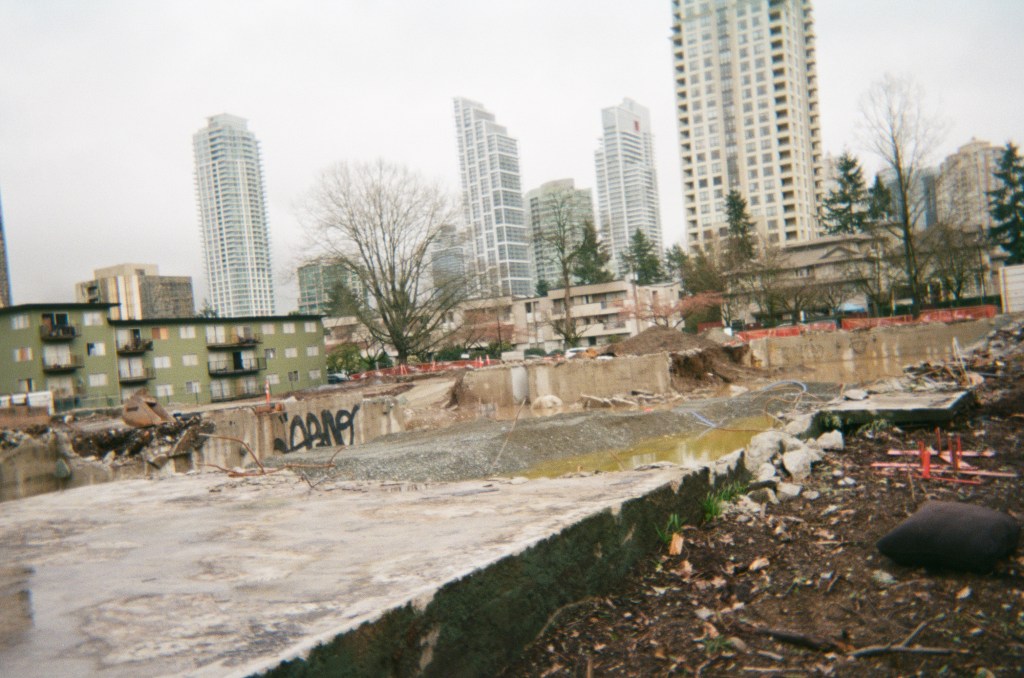
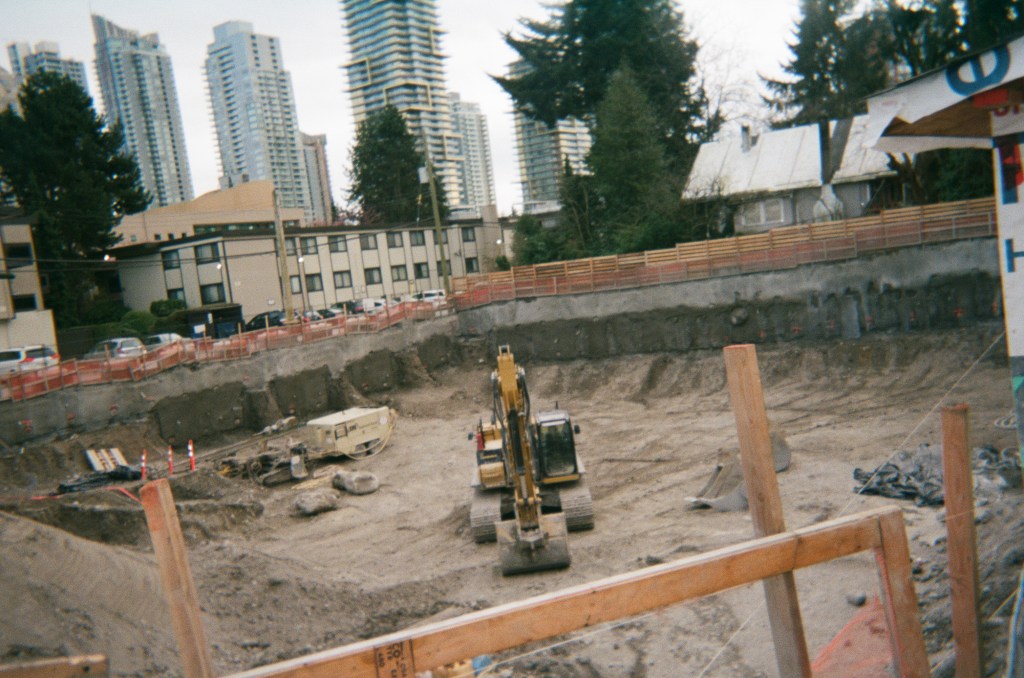
🎵I was in the pit, you were in the pit, we all were in the piiiiiit🎵
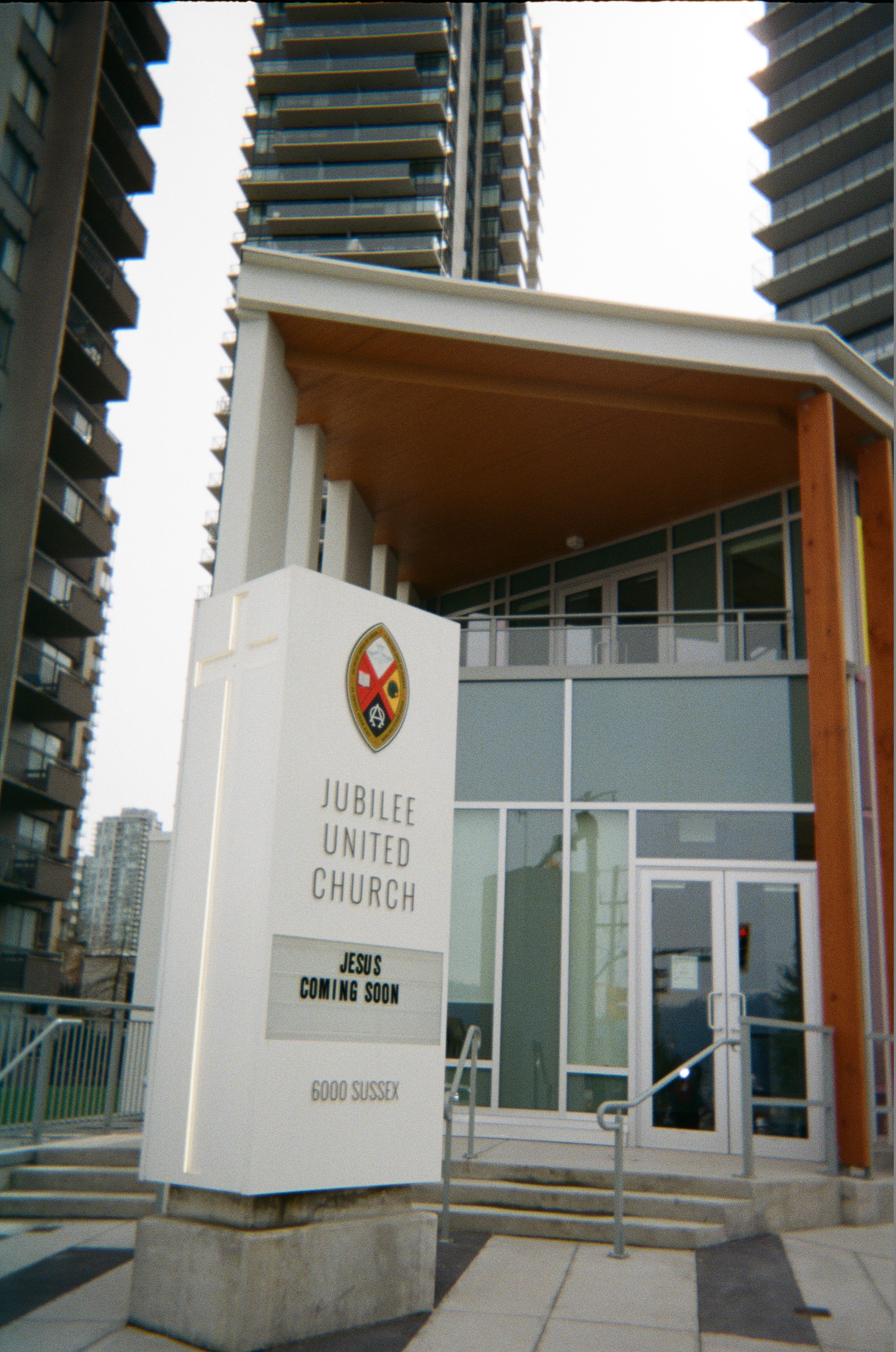
I grew up near the Jubilee United Church before it was knocked down and re-built, attached to glittery apartments. This cheeky letterboard gives me hope that there is some character in this place. The Sussex is one of my favourite new developments in Metrotown. I will dive into why in a future article about art in the built environment.
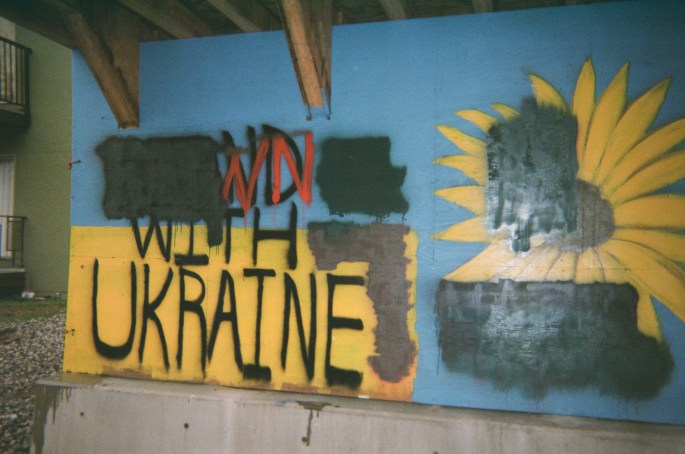
A Metrotown resident painted a mural on a construction site on Wilson street to show love for Ukraine. It was soon defiled with Russian propaganda, then covered up, and now has been re-painted.
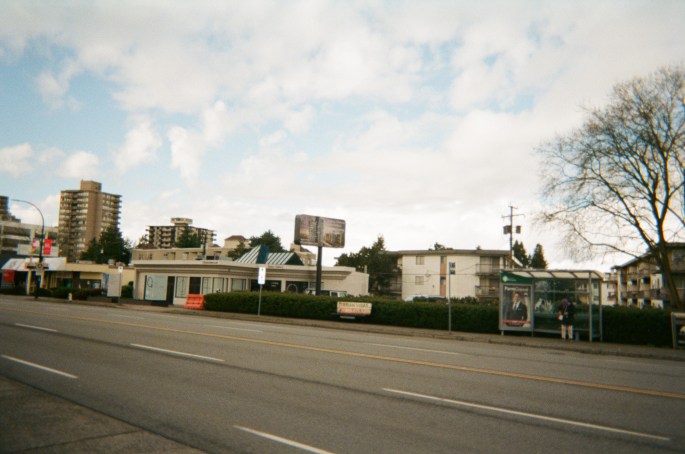
I want to give a quick shoutout to the Burnaby Beacon, our community newsletter. I was instantly impressed by their balance of fun and hard-hitting local news. And over the months, I have been even more impressed by their intersectional and progressive approach. It is my go-to place to learn about what is going on in my area and beyond, and you will notice I cited them a few times in this essay.
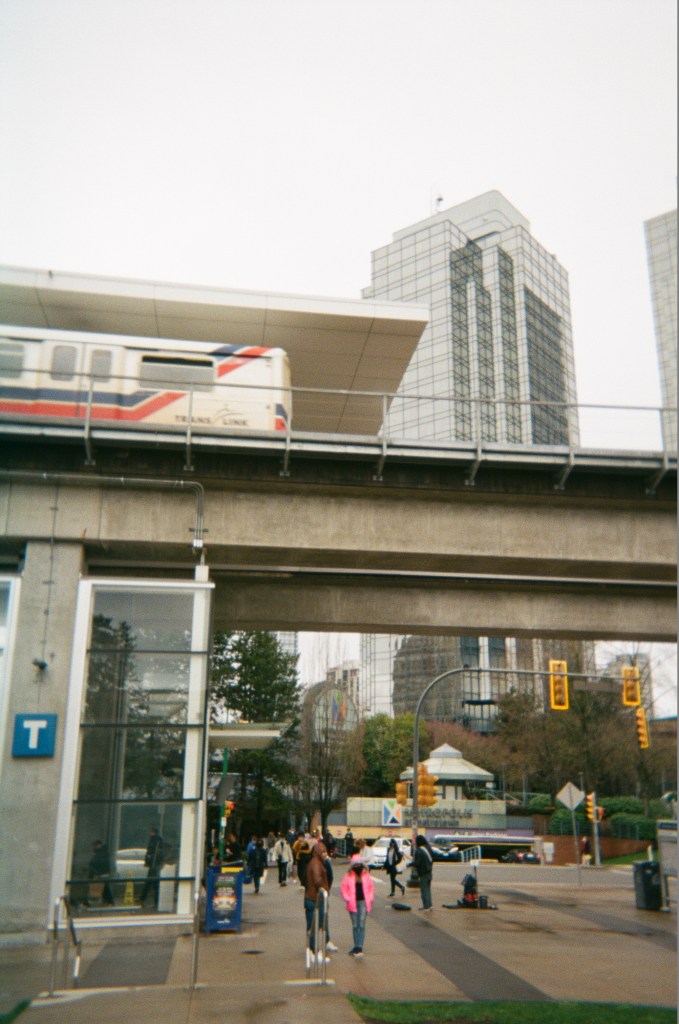
Immersing myself in Metrotown’s dynamism was cathartic and heart-warming. The frame above perfectly captures the buzzing ‘downtown’. Plus, the retro film paired with the retro Mark I train makes my heart sing.
The other day, my friend said “I could live and die in Burnaby”. It made me chuckle, but I genuinely love hearing this from my peers, because I agree. Although I may not end up in Burnaby, it has nurtured me since day one. I will try to nurture it back, however I can.
To see all the photos I took for this essay, click here.
 marina miller