
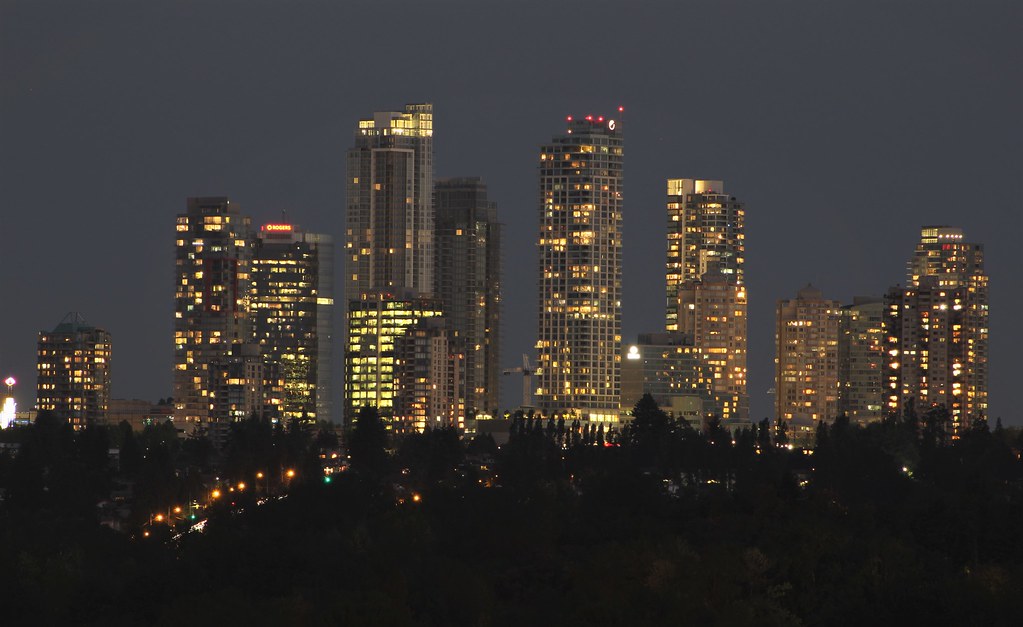
I lived in Metrotown until I was 24, and I never understood why Metro Vancouver had the moniker of “no-fun city”.
That is, until I moved to London, UK. There, a normal Thursday evening after work could look like this:

I noticed that in the city centre, as well as the suburb I lived in, there were neighborhood pubs everywhere, and it really informed the social fabric.
In my hometown? There are nearly no spaces like this, and it speaks to a broader gap around nightlife in general.
In May 2023, I first wrote about this topic of interest while I was living in London.
When I entered my Community Planning diploma program three months ago, my classmates and I were tasked with picking a policy problem to analyze.
I took a risk choosing a more “fun” topic compared to the choices of my peers, which ranged from from flooding in Still Creek to urban heat deaths.
Once I started researching the lack of nightlife in Burnaby, however, I realized I had enough evidence to build a viable policy and research proposal.
For Policy Methods class, we were tasked with two things: finding and evaluating some potential solutions to the problem, and proposing how we would further research the problem and it’s solution(s). Over the course of the semester, we learned various qualitative and quantitative methods for this.
Here’s a look at my term project!
Problem setup, client, and stakeholders
This project explores a socioeconomic policy problem in the City of Burnaby, BC. It is prepared for the client of Burnaby City Council. While the province’s Liquor and Cannabis Regulation Branch (LCRB) issues licenses and regulates service and distribution, they are required to consider specific community needs, so the City of Burnaby conducts its own assessment and provides the province with a recommendation on whether or not to issue a license.
Besides the City and the LCRB, there are other key stakeholders who this policy analysis would be relevant to. I mapped their power versus their interest in the problem to inform option evaluation as well as engagement as part of the implementation process. Other stakeholders include TransLink, Police, Burnaby Board of Trade, Fraser Health, Advisory Committee, entrepreneurs and businesses, non-profits, and the public.
Policy problem definition: The number of pubs in Burnaby is too low.
What is a pub? There are different types of businesses that can hold “liquor-primary” licenses in British Columbia. For the sake of this problem, we define pubs with BC’s terminology of “liquor-primary establishments and clubs with family foodservice and minors permitted”. It is worth noting that breweries are out of scope for this analysis, as they need “manufacturing” licenses.
Why does this warrant further investigation and action?
Vancouver is often called “no-fun city”, and one reason for that is the nature of its nightlife. Outside of the downtown core or commercial districts like Main Street, there aren’t many spots to get casual, affordable drinks. In Burnaby, there are even fewer spots like this. Instead, you need to fight the lines at expensive chains like Cactus Club. On any given Friday at midnight, you’ll find Burnabarians at Bubble Tea, but that doesn’t mean there’s no appetite for pubs.
The previous statements come from personal experience, or anecdotes from friends and family. After preliminary research in the first two assignments, we can see there is wider consensus around this problem. First, there’s been discussion about how getting a liquor-primary license in BC is costly, complicated, and takes a long time. Vancouver and Burnaby have even taken policy action recently around licensing certain liquor establishments.
The Daily Hive recently published an article exploring the desire and likelihood for a nightclub or pub at Metrotown: “While there are obviously many booze-serving establishments in and around the Metrotown area, like Cactus Club and Earls, a liquor primary haunt, like a community pub or club for folks to gather, is notably absent in the vicinity of the mall.” They also cite a study showing that 32% of hospitality operators in B.C. say staff shortages have impacted their business in the last year, and that this is the highest in Canada.
Demographic-wise, Burnaby’s population has grown steadily in the last three decades, but families are having fewer children. This suggests a higher portion of the population would be drinking-age. Additionally, a city-run survey of Burnabarians showed neutral or supportive views on expanding liquor service in recent years.
Burnaby’s Economic Development Strategy (2020) states that the city’s centres have become “functional, but perhaps dull.” It also includes a goal to ensure the in-progress OCP update explores ways to transform employment districts “into more lively urban places by adding housing, retail, restaurants, entertainment, and community amenities.” Part of this includes a new task force on economic growth and resilience. The Burnaby Board of Trade also has a goal to enhance social diversity.
Research found that 14 bars and nightclubs in Vancouver’s Granville Entertainment District support 900 jobs and generate $43.5 mil annually. There’s a lot of economic potential with nightlife, and in Burnaby that life exists in traditional restaurants.
What’s “out of scope”?
There are several other variables, such as availability of space for pubs in existing or new buildings, zoning regulations, ages of residents, and incomes of residents. Additionally, while it would be interesting to tackle the issue that you can’t stand and mingle in most bars in B.C., this would be a large paradigm shift, and may not affect the number of pubs as much as the nature of them.
Policy options identified to date
| Option 1: No action (status quo) | No policy action taken, business as usual, which for Burnaby does not include much existing action. |
| Option 2: Night Mayor | Following in the footsteps of tens of cities worldwide, including neighbouring Vancouver, this option would involve establishing an official city-staffed “nighttime economy office”. Led by a “night mayor”, this group would focus on developing and executing policies and initiatives for a thriving, safe, and equitable nighttime economy within Burnaby’s specific planning contexts. A nighttime office is a broad initiative, and isn’t specifically targeting the creation of new pubs. However, it is proven to be a nexus for specific policies in other cities. |
| Option 3: Making it easier to get a liquor-primary license | Getting a liquor-primary license in BC is costly, complicated, and takes a long time. Removing some of these barriers could facilitate more pubs to open or transform. |
| Option 4: Running the SkyTrain all night on weekends | Running the SkyTrain (even if just Expo and Millennium Lines) all night on Friday and Saturday nights. |
Key criteria for analyzing the options
- Technical feasibility: Impact on the policy problem (as defined)
- Economic: Costs and benefits
- Political: Alignment with values of the client and other powerful groups
- Administrative: Ease of implementation
- Considering equity for all of the above
Initial assessment of policy options
The Hi-Med-Low scale indicates the level that the option is feasible while addressing the policy problem, from the lens of that criteria.
| Technical | Economic | Political | Admin | Equity | |
| Option 1 | Med | Med | Med | Hi | Med |
| Option 2 | Hi | Med | Med | Med | Med |
| Option 3 | Med | Med | Hi | Med | Med |
| Option 4 | Lo | Lo | Lo | Lo | Hi |
| Option 1: No action (status quo) | This is an economic development policy problem, but it is not inherently critical to the quality of life of the community. Not taking any action is unlikely to lead to a crisis requiring response. It is unlikely to create direct financial or administrative load. However, there are Board of Trade and City-stated goals to create more lively urban places in employment districts and to enhance social diversity overall. |
| Option 2: Night Mayor | By 2020 there were more than 40 local governments around the world that had appointed night mayors/offices, such as London and Amsterdam. Vancouver followed suit, although it appears this was not continued. There would be costs involved with assembling a new team, but there is potential for funding from a multi-stakeholder collaboration, namely those who would benefit from the increased economic activity. |
| Option 3: Making it easier to get a liquor-primary license | Relaxed liquor laws have been implemented in Vancouver, Montreal, Alberta, Quebec, and Manitoba since the pandemic. Burnaby itself is already making policy moves to remove the red tape around liquor-primary licenses. Compared to cities in Europe, BC is restrictive around how liquor can be sold and consumed, but there is political and public appetite for relaxing rules. Making it easier for pubs to get licensed may be one of the most direct policy actions that could encourage the opening of pubs in Burnaby under BC’s legislative frameworks. A city-run survey of Burnabarians showed neutral or supportive views on expanding liquor service. However, the province has ultimate authority on licensing, and the political viability for relaxing liquor laws is unclear without further research. We also need to better understand the economic and administrative effects this would have, whether positive or negative. |
| Option 4: Running the SkyTrain all night on weekends | This is the least viable option of the four presented. Night SkyTrain is not within TransLink’s financial or operational scope after they conducted a recent study. The infrastructure does not support it, and there would need to be a major political or private-motivated initiative to achieve it. |
Implementation, monitoring, and stakeholder engagement
We will discuss two of the more viable options, Option 2 (Night Office) and Option 3 (licensing changes).
Option 2: Night Office
- Implementing team: A Night Office initiative could be treated as a two-year pilot project which would need to be re-evaluated. This could be implemented by a short-term planning team rather than long-range.
- Informing and engaging: The idea should be presented early on to the Liquor Board, the Advisory Committee, and the Health Authority, as they can pose barriers as well as advocacy for the policy. This will prevent delays down the line and encourage effective policymaking. Their feedback is critical to the “readiness” as well.
- Setting goals: Goals and Key Performance Indicators (KPIs) should be set early on.
- Monitoring: Monitoring will help inform new iterations of the project, whether it’s within the pilot or the permanent establishment. During monitoring we must ask: Was an important aspect overlooked? Was the right problem identified? Did we have the right data? Should the policy be modified or cancelled? For measurable data, we could set KPIs based on the number of pubs, number liquor-primary licenses approved, and feedback from a public survey. Evaluation should come from multiple points of view to ensure an equitable perspective, as results can be used politically.
- Other key implementation considerations include risk mapping, hiring and team building, responsibility delegation, and resource allocation.
Option 3: Licensing Changes
The points made for Option 3 apply, except for these differences:
- Informing and engaging: Changing how licensing works would involve an increased administrative load, at least in the short term, so we should engage front-line staff and their leaders with communications, forms, templates, and training sessions. We may even want to consider Co-Creation, if there is a trusting relationship with LCRB.
- Monitoring: We should ensure any application forms or questionnaires include a category for pubs, so data analysis provides relevant results against the variables.
Research Proposal
How interviews will be used to learn more
For the interviewees below, we’d create a set of questions but would be open to tangents to find new information we may not have thought to ask about. They would go from simple to more complex, and if there are any more controversial questions those would be sandwiched in the middle. The question list below is not exhaustive.
| Interviewee | Purpose | Example questions |
| Burnaby economic development planner | Data, learning where to find data, expert opinions, gauge reaction, find others to interview | Do you think pubs are an important part of achieving Burnaby’s Economic Development Strategy, around its goals for more lively urban places? Have you conducted any internal research on this topic that you’d be willing to share? Do you know if others have? Have you heard how things are going with the Vancouver Night Office? Where could potential funding come from for a night office in Burnaby? |
| Econ planners from other Canadian cities | Case studies and data, gauge reaction, find others to interview | What resistance or challenges did you face in implementing these policies? What led to their approval in the end? What aspirations do you have for further policy development in this area? |
| Liquor Board licensing leadership | Gauge reaction, gather data, find others to interview, constraints | Do you think the province would be open minded to making it easier to get a license for a pub? Is there anyone else you think it would be beneficial for me to speak with? |
| Burnaby Board of Trade | Gauge interests, get anecdotes, gather existing data | Do you feel there is a lack of pubs in Burnaby compared to Vancouver and other major Canadian cities and their suburbs? Is there an appetite for more? |
| Burnaby Business owners | Gauge interests, get anecdotes, gather existing data | Have you ever applied for a pub license? What barriers have you faced, if any? Is there sufficient competition? |
| Non-profits | Learning about the possible equity impacts on marginalized groups | Are there any positive or negative impacts of pubs or similar spaces? |
| Scholars | Data, learning where to find data, case studies | What are the social and economic benefits of nightlife? Of Pubs? |
Recommended research methods
Research to find out why this is a problem
- Hypothesis: Cities with more pubs have better social diversity, resident happiness, and economic resilience
- Dependent variables: Social diversity, resident happiness, economic resilience
- Independent variable: Number of pubs
Methods
We should research the independent variable for Burnaby, as we lack data on the number of pubs per capita in Burnaby versus other cities. This could be collected through interviews, outreach, open data portals, and analyzed through traditional and spatial analysis.
To research the dependent variables, there are a couple possible methods in addition to the interviews described earlier:
Survey
- Cross-sectional, to get thoughts on the current state of the problem
- Combination of non-probabilistic and representative, by sending the survey to key stakeholders (purposive sample) as well as advertising it online to Burnaby’s public, getting random respondents but collecting demographic data
- Questions would be branched to provide relevant questions to those two audiences
- Key stakeholders include business owners and entrepreneurs, asking about their experience with licensing and operation, and their interest and thoughts on the problem and potential solutions
- The public would be asked more questions about their interest or concerns with the problem and potential solutions
- There would be a combination of open and closed-ended questions which could be coded and analyzed
- Could conduct a crosstab analysis, for example to understand business owner opinions on the problem versus their experience with licensing
Case studies
- Descriptive, to describe or define a particular phenomenon (but we could also argue we need an Explanatory approach, seeking the causation of the problem)
- Longitudinal, to see how pubs have changed over time vs. the dependent variables
- Comparative, to compare multiple cities
- Collecting economic data from other cities who have implemented policies to address nighttime economy or specific policies for pubs and similar establishments
- Pick places with similar cultures to Canada, as comparing alcohol licensing rules with certain countries wouldn’t make sense and may affect analysis
- Additionally, we may want to conduct a longitudinal study to see how pubs have emerged and left over time in the business-as-usual policy environment in Burnaby, to help find out if a free market leads to pubs independently
Research to find out what can be done
Focusing on Option 3 (Licensing changes)
- Hypothesis: Cities that make it easier to get a liquor-primary license have more pubs
- Dependent variable: Number of pubs
- Independent variable: Ability to get a liquor-primary license
Methods
Initial research in earlier assignments didn’t reveal specific in other cities that targeted the creation of new pubs specifically. The closest are recent pledges to introduce policies that facilitate new pubs, bars, and cafes, and to protect existing ones in the UK. Comprehensive nighttime economy strategies seem to be more common and viable against the criteria based on the research. One of the notable bodies to conduct research on nighttime economies broadly is the 24 Hour cities network.
Deeper research would need to be done. In addition to the interviews described earlier, possible methods include:
Data analysis
- The City of Burnaby has some data on liquor licensing. We know this from a recent Daily Hive article, where the Journalist spoke to the City, who reported back that there weren’t any liquor primary applications for Metrotown dating back to 2019.
- We would want to find out how granular Burnaby’s data is, and where we could get more granular data. We would want to see numbers for BC’s terminology of “liquor-primary establishments and clubs with family foodservice and minors permitted” to get as close as we can to pubs data.
- We would also want to collect and analyze data from LCRB on the time it takes to process these applications, and the costs incurred by the applicant when applying to get a sense of the ability to acquire them.
Cost-benefit analysis
- There are several moving parts to this option, so a cost-benefit analysis would be useful to research it further. For example, reducing the cost of licenses would reduce revenues for the province. In order to speed up approval times, more personnel would be needed. While these may encourage more businesses to open, it may create a feedback loop where there isn’t enough administrative support to process the increasing number of licenses. However, more pubs could mean more liquor tax revenue, which could offset some of this loss. We should quantify these possibilities better.
Case studies
- It is unclear whether the BC would be amenable to relaxing liquor laws, but shifts are happening in Quebec, Alberta, and Manitoba. Case studies could be found through interviews with the planners from these cities, and through further online research.

It’s critical to have a well-informed and purposefully designed policymaking process, especially when addressing community planning issues. Planning policy affects both individual lives, but that of the larger community and its systems. This paper defined a problem, presented existing research, and evaluated policy options. Further, it outlined implementation and monitoring needs, and most importantly explained how further research can be done to understand the problem and its most viable solutions. Multifaceted research, then an iterative, engaged implementation process, is key to effective and accountable policy planning.
 marina miller