
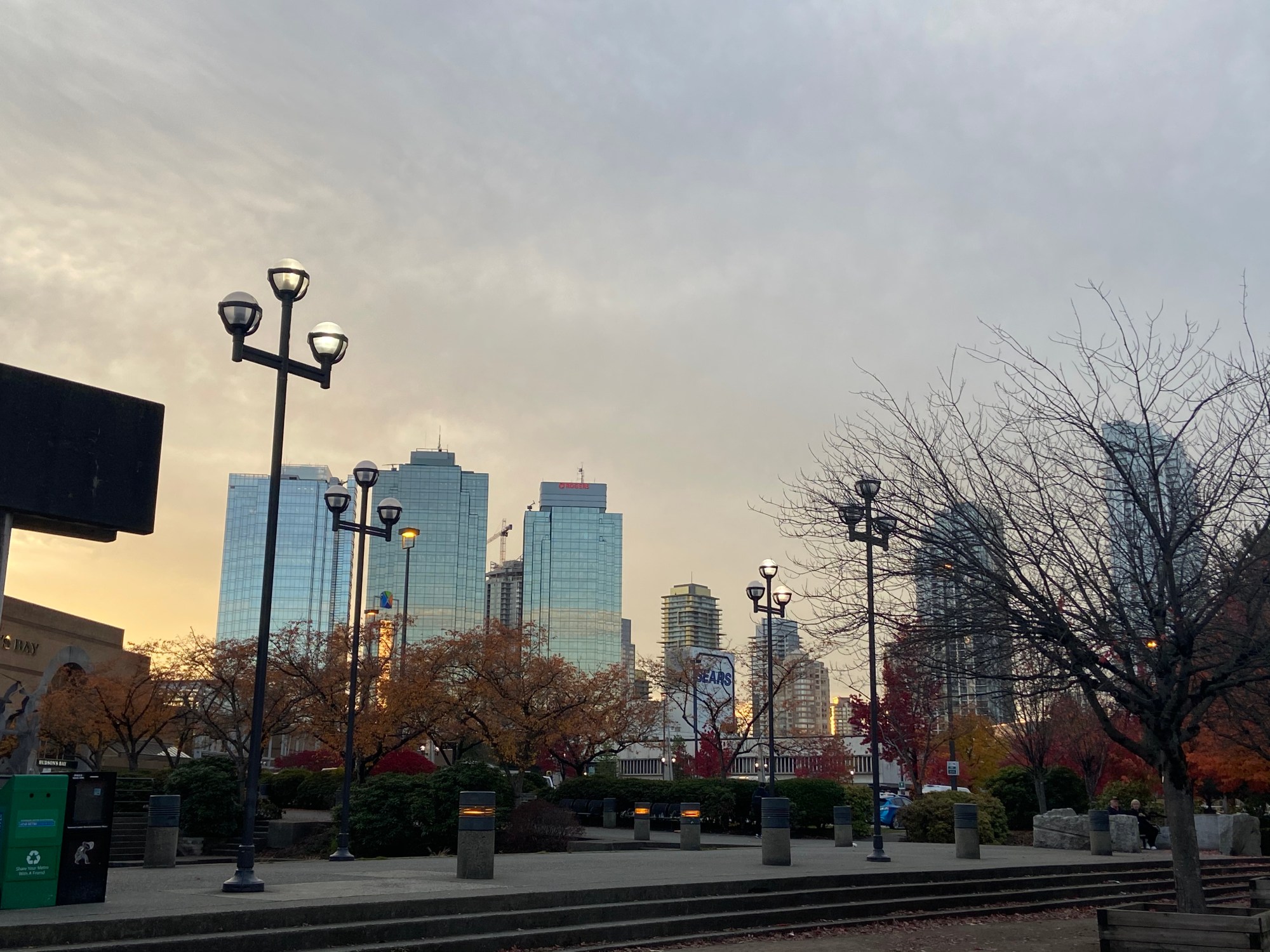
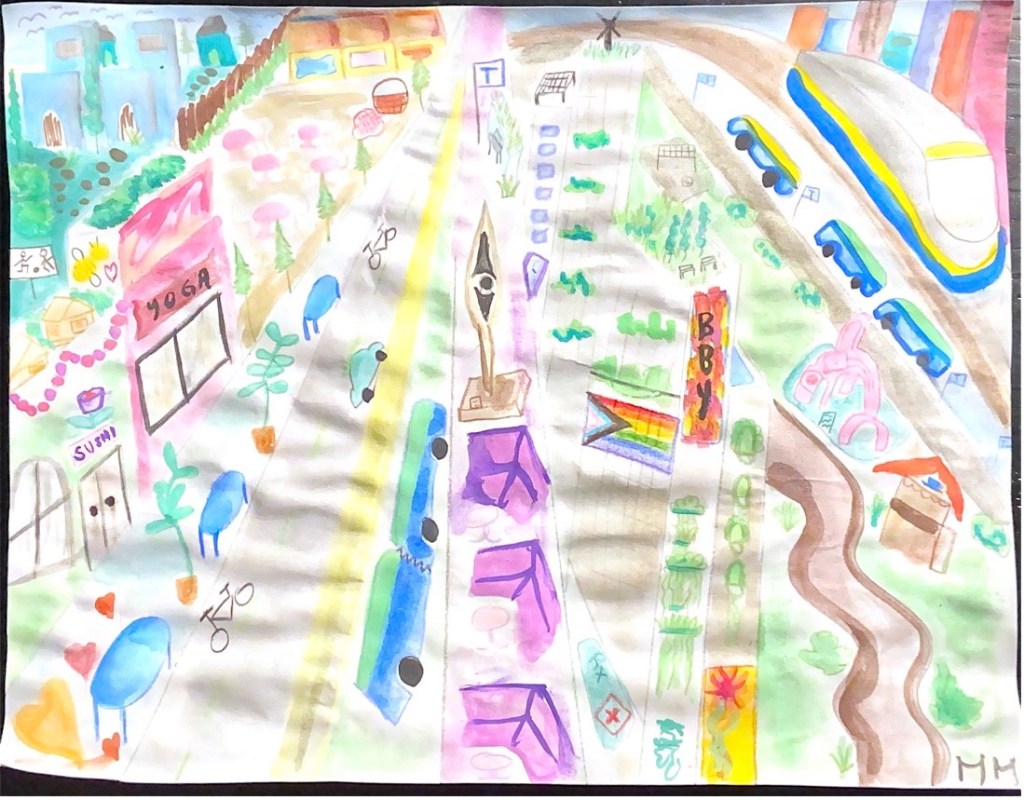
Metrotown has been a beacon of urban development for decades in Burnaby, and not by accident. With the implementation of the Expo Line SkyTrain, the city’s plans to make Burnaby’s “downtown” flourished with new connections to the region. I live in a duplex in the neighbourhood where my dad, grandparents, and great-grandparents have lived since the 1960s. As a fourth-generation resident, I have been able to watch the neighbourhood transform, and hear from my relatives what it looked like long before that. The now glittering Metrotown is packed with skyscrapers and centralized by the largest mall in British Columbia. However, as I will outline in this article, there is a lot of room for cultural, social, and economic equity through urban planning.
Accessibility
Only 50% of Burnaby’s roads have sidewalks on both sides. 21% of them have sidewalks on one side, and 29% have none (City of Burnaby). This is noticeable in my residential area adjacent to Metrotown mall. Many side streets are not evenly paved, become waterlogged in the rain, and are not well lit. Only recently have most blocks been retrofitted with low light-pollution LED street lamps. This raises concerns for those who use active transportation and have accessibility needs in the neighbourhood. To reach Metrotown and the SkyTrain, a hill must be climbed on both sides. Without proper road maintenance, pedestrian-focused traffic signals, and sidewalks, it becomes harder for people to sustainably travel within the neighbourhood at all ages. Plus, the bike route which goes down my street is only marked by periodic, fading signals and a sign on the road. A dedicated bike lane would be much safer on this car-centric block.
Housing
One of the biggest social and economic crises in Metrotown is the lack of adequate, affordable housing. The rental complexes behind the SkyTrain have traditionally been comprised of low-income and immigrant residents; in the 2016 census, the southwest quadrant of Burnaby had 54% immigrants (City of Burnaby). However, the area has become greatly gentrified in the last decade or two, which includes the dreaded “demoviction”. Jones and Ley’s analysis of Metrotown’s transit-oriented development touches on this, noting that Between 2012-15, about 300 units were destroyed in Burnaby, most of those in Metrotown (Jones and Ley, 2016, p. 17). It is surprising that the discrimination towards low income residents has gone so unchecked, as Metrotown is an NDP stronghold (Jones and Ley, p. 17).
Placemaking and Culture
Although Central Park hugs the very west end of Metrotown, the core lacks green space. The soon-to-be completed Station Square development next to the mall has attempted a compact, New Urbanist thoroughfare, but has yet to deliver a balance of plant life and colour. The lack of public art also adds to the grey. For example, a disappointing metal shoe can be seen next to the busy Metrotown bus loop (see image below). I wrote a paper on placemaking at Station Square before the pandemic this year, and you can see the photo album here.
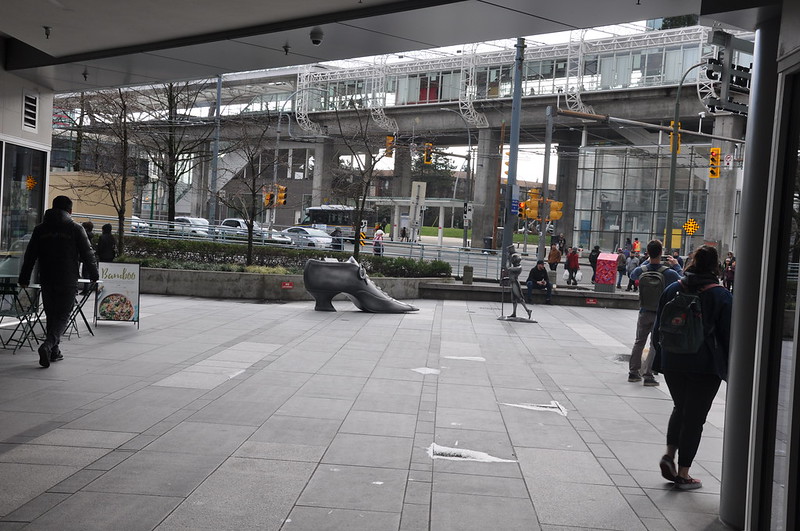
There is a lack of cultural diversity reflected in the built environment. You would not be able to infer the diversity of Metrotown residents by looking at its public space. This is especially true for Indigenous representation, even though 28% of Burnaby’s Indigenous peoples live in this southwest quadrant (City of Burnaby).
My Ideal Metrotown
After learning about how pandemics affect sustainable development and the condition of our cities, there are so many things I want to see in my neighbourhood. The complex system of an urban core like Metrotown can benefit from urban planning which considers the current pandemic, as it can for cities across the globe. Here is what my ideal Metrotown would look like as the pandemic continues, and afterwards:
- Sustainable construction and intensive building retrofitting
- Denser housing which does not exclude the low income, immigrant, and family population that already benefits from living in this amazing neighbourhood. This could be tackled by mandating mixed-use buildings with small businesses on the street front and high-rise housing that are low-income, welfare, middle income, rental, and high income ownership units. Tackling the housing crisis here while implementing sustainable development concepts to the built environment is a form of design justice. This will be necessary as Burnaby’s populations increases and we come out of COVID-19
When cities plan for the future, “the goal is to produce realistic projections at the correct order of magnitude that will allow cities to accurately plan for their future growth.”
Resilient Cities Network
- Reprioritizing city and provincial funding to improve conditions for the houseless and those in deep poverty, regarding housing and the opioid crisis
- Lots of greenery integrated into the built environment, including on the sides of buildings – urban acupuncture-esque
- Indigenous placemaking through cultural expressions like murals and sculptures, allowing local Indigenous peoples to feel more welcome and connected to their homelands which have been violently and colonially disconnected from them. A great example of integrating Indigenous worldviews into the build environment is at YVR Airport where I worked for 8 months in 2019
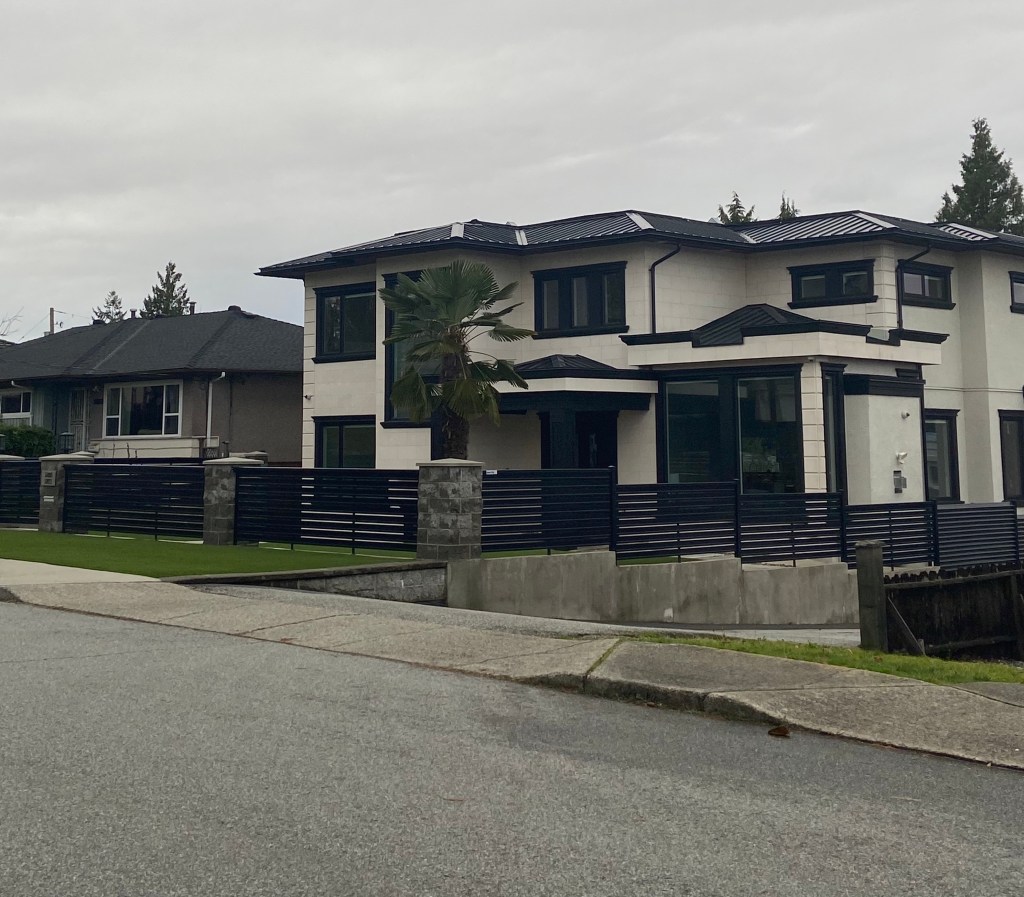
- In the residential areas like where I live, allowing there to be “small houses”: BC has already been an early adopter of laneway houses, lock-off suites, and micro-suites, but it is still a small part of our housing economy (Small Housing BC, p. 10)
- Urban planning which relies heavily on systems thinking, particularly by implementing changes to the built environment which aggressively tackle climate change and systemic racism. For example: inclusive art, multi-lingual signage, and tactical urbanism (see below)
- Tactical Urbanism (TU): As can be seen in many Vancouver streets to facilitate social distancing, there could be pop-up plazas, extended sidewalks and reduces car lanes, safer dedicated bike lanes, better bus service, wand other tactical methods to improve Metrotown’s public areas. With these possibilities in mind, it must also be noted that TU can be seen as supporting the gentrification process by targeting the young, educated “creative” class (Mould, 2014, p. 532). Therefore, there must be room for grassroots and rebellious activism that can carve out spatial justice
Reflections
Burnaby must go much farther than claiming terms like New Urbanism as the core shifts and grows. There must be “an attention to the specific political, social, institutional, and local contexts” in urban planning (McCann and Ward, 2010, p. 181). There is already an ambitious multi-decade plan for Metrotown, which will involve even more people-centred streets that bisect the current shopping mall (Chan, 2019).
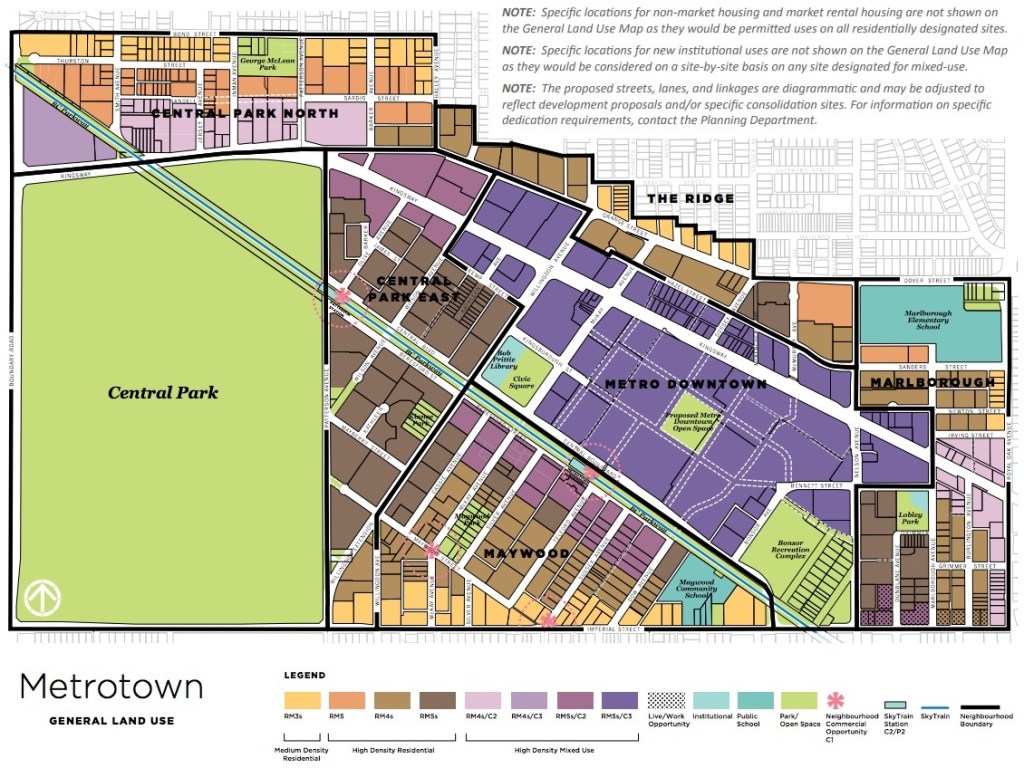
This sort of connectivity and systems thinking is great, but decades is a long time to wait for spatial justice. The COVID-19 pandemic has revealed much more urgency for social and economic equity in the region, and city planners will be key agents in its transformation. Plans for a futurist Metrotown must include radical climate activism, anti-racism, Indigenous collaboration, and tactical urbanism if it wants to be resilient. I would love to stay here, but a lot would need to change for it to feel like a truly healthy community.
About the author: Marina is completing her Bachelor of Environment degree at Simon Fraser University, majoring in Global Environmental Systems (GES) and has completed a Geographic Information Sciences certificate. She had worked with TransLink as a GIS Planner, and with Vancouver Airport Authority’s Environment Department. She is passionate about Indigenous and racial justice, queer rights, makeup, noodle soup, and Animal Crossing. Marina lives, works, and studies on the unceded Coast Salish territories of the xʷməθkʷəy̓əm (Musqueam), Sḵwx̱wú7mesh Úxwumixw (Squamish), and səl̓ilwətaɁɬ (Tsleil-Waututh) Nations.
Word count: 1153
Resources
Art. Vancouver Airport Authority (YVR), http://www.yvr.ca/en/about-yvr/art.
Chan, Kenneth. “Metropolis at Metrotown Shopping Mall to Be Redeveloped into Downtown Burnaby.” Daily Hive, 26 Oct. 2019, dailyhive.com/vancouver/metropolis-at-metrotown-redevelopment-rezoning-process.
Jones, Craig E., and David Ley. “Transit-Oriented Development and Gentrification along Metro Vancouvers Low-Income SkyTrain Corridor.” The Canadian Geographer / Le Géographe Canadien, vol. 60, no. 1, 2016, pp. 9–22., doi:10.1111/cag.12256.
Mccann, Eugene, and Kevin Ward. “Relationality/Territoriality: Toward a Conceptualization of Cities in the World.” Geoforum, vol. 41, no. 2, 2010, pp. 175–184., doi:10.1016/j.geoforum.2009.06.006.
Mould, Oli. “Tactical Urbanism: The New Vernacular of the Creative City.” Geography Compass, vol. 8, no. 8, 2014, pp. 529–539., doi:10.1111/gec3.12146.
Planning for Resilient Urban Growth. Resilient Cities Network, 26 Nov. 2020, resilientcitiesnetwork.org/urban_resiliences/planning-for-a-resilient-urban-growth/.
“Population & Quick Stats.” About Burnaby, City of Burnaby, http://www.burnaby.ca/about-burnaby/about/population—quick-stats.html.
Reports. Small Housing BC, http://www.smallhousingbc.org/reports/.
“Small Houses: Innovations in Small-scale Living from North America” Small Housing BC. 2015. Retrieved from http://www.smallhousingbc.org/wp-content/uploads/2015/03/SMHT_1stEdition_Feb2015.pdf
“Walking in Burnaby Fact Sheet”. City of Burnaby. n.d.


awesome!!!
LikeLiked by 1 person