This book review was written in 2020 for Rem 407 at SFU (Prof: Cliff Atleo). As we approach the second National Day for Truth and Reconciliation, I wanted to share a book recommendation by an Indigenous author. Coté focuses on food security and how it is intertwined with culture and reconciliation.
Introduction
I want to first position myself as an uninvited settler on unceded Coast Salish territory. The way I perceive the book’s arguments are biased to my experience, but in analyzing it critically I hope to better understand resources and governance. Charlotte Coté is a professor of American Indian Studies at the University of Washington, and is a member of the Tseshaht First Nation, Nuu-chah-nulth. She writes about the history and importance of hunting whales for her community and the neighbouring Makah in Washington state. Part of her book details interviews with Makah individuals to learn more about their turbulent whaling experiences. Her writing style is accessible, and I appreciate the wide range of external sources used to support her arguments. This book review will present main themes and takeaways, and will critically analyze them. I talk about what stood out most to me and provoked critical thinking.
Summary
As is true with most Indigenous settler-colonial history writing, a common thread throughout the book is government racism and discrimination. The American and Canadian governments imposed pan-indigenous policies on hundreds of unique Indigenous groups since contact. This is an underlying condition for ongoing colonialism: assuming First Peoples are all the same. Resisting this notion, Coté argues that “cultures must be examined within their own ethnohistorical, contemporary, and social contexts” (Coté, 2010, p. 165). Recognition of unique culture, which includes whaling, can reduce existing discriminatory policies and implementation of colonial authority by acknowledging pre-existing governance systems and societies. Though it is not that simple; Coté details the legal rollercoaster Makah and Nuu-chah-nulth peoples have been on for over 100 years regarding marine resource rights.
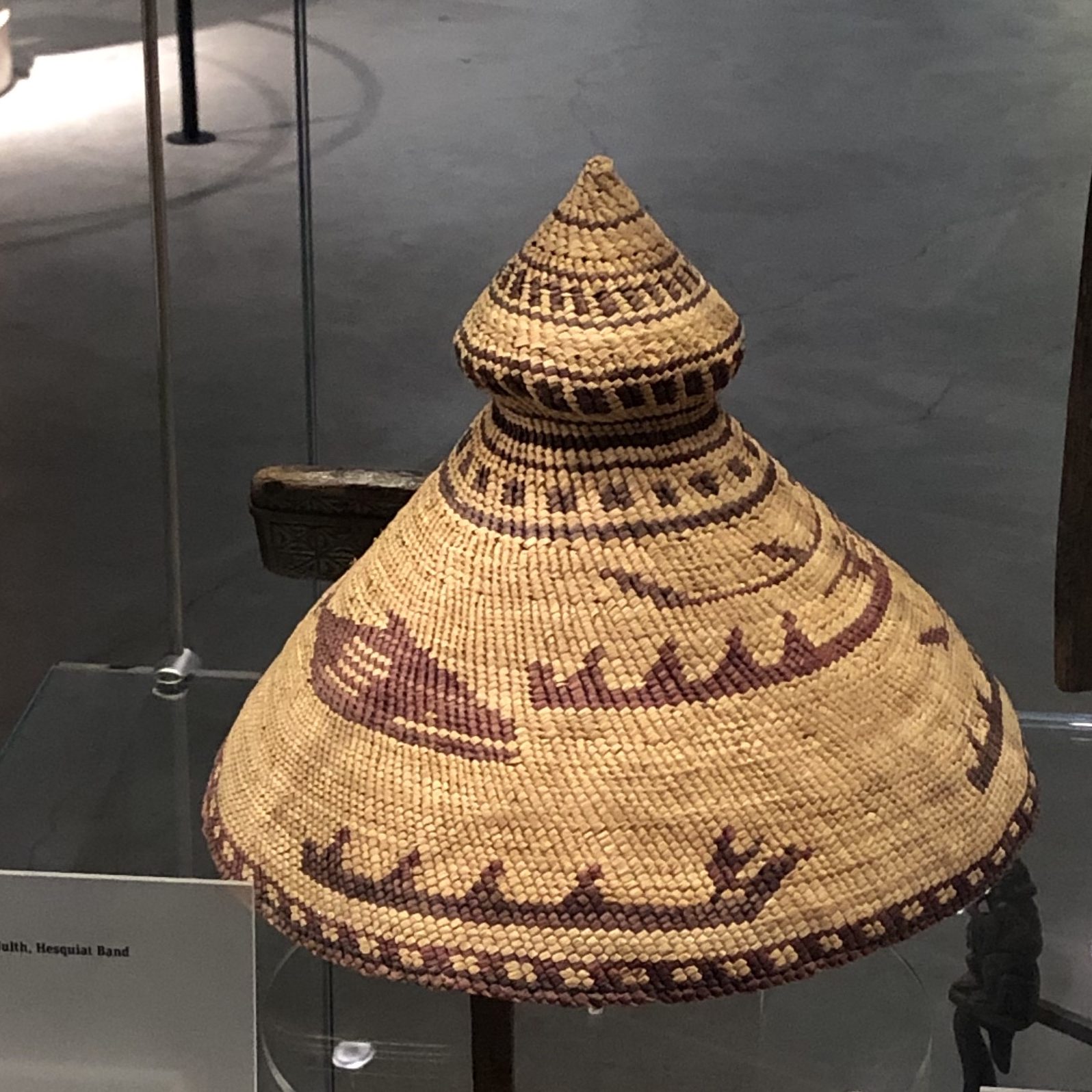
The most interesting part of this book to me is the importance of whaling to these nations. It is the basis of their unique cultures expressed through names, art stories, ceremonies, songs, dance, and more (Coté, p.7-9, 41) [see fig. 1]. The products which can be made out of ch’ih-t’uh-pook (whales) are seemingly endless, and go far beyond the food that used to make up ¾ of all meat and oil the Nuu-chah-nulth consumed (Coté, p. 20). Umeek’s concept of Tsawalk (everything is one) is used to describe how whaling is “the heart and soul of [their] world” and “integral to [their] origin” (Coté, p. 69 and 73). At the end of the book she presents evidence for how consuming whale can make people physically and spiritually healthier. This is especially important in a time where many Indigenous peoples face adverse health effects and food poverty.
In tandem with the importance of whaling, Coté argues that revitalizing whaling practices is vital. Centuries of colonial oppression through breaching treaties, residential schools, potlatch bans, exclusion from commercial whaling, imposing new food systems, and overhunting has reduced Indigenous peoples’ ability to practice subsistence whaling. But when the Makah caught a whale in 1999, their children felt proud and were inspired to prepare the whale and learn more of their language. Revitalization also means more whale consumption and its mentioned health benefits.
Analysis
The root of resistance to the 1999 Makah whale hunt can provide a lot of insight into the modern colonial enterprise. There is a lot of racism, explicit or not, from Canada and America’s federal and state governments. Plus, there is a vocal anti-whaling movement from animal rights activists, settler citizens, and policymakers. Resistance to traditional hunting practices, which do not have a significant impact on whale populations in the study area (Coté, p. 172), come from anti-Indigenous beliefs which the government allows to continue. These neo-liberal systems are based on the idea that one’s downfall is their fault, therefore whaling revitalization is seen as unnecessary, especially if it involves modern technology. When Makah hunters asked to participate in settler commercial hunting with modern technology, their requests were ignored (Coté, p. 65). I agree with Coté and Clifford Atleo Sr. that the Canadian government was wrong to push them aside and prohibit access to the marine resources they relied heavily on (Coté, p. 126).
Shepard Krech’s idea of the “ecological indian” is touched on in the book, and I see a direct connection between it and whaling conflicts. The assumption that Indigenous peoples are environmentalists above all else is a stark misunderstanding of the high unemployment and health problems present in their communities.
“For many Indigenous people in North America, economic concerns trump green issues. They do not want to sacrifice their identity…or their sense of belonging to place, but they desire jobs, disposable income, and the trappings of middle-class life…Are they somehow “less Native” because they favor these massive projects [i.e. whaling]?”
(Krech, 2005, p. 84).
Coté expands on this, arguing that “the image of the ‘ecological indian’ is exploited only when the Indians are doing what the ecologists and animal rights activists want them to do” (Coté, p. 161).
Whaling practices are culturally vital to the Makah and Nuu-chah-nulth, and I think they should be allowed to hunt them in their own way with the assistance of modern technology if desired, and within limits that do not compromise whale populations. Conservation seeks optimal sustainable population of whales, not an absence of hunting (Coté, p. 179). What the government and anti-whaling activists should be targeting is commercial overfishing and whaling in the Pacific rather than small-scale hunting. Indigenous peoples have been able to sustainably practice whaling for thousands of years, and its continuation and revitalization should be celebrated rather than suppressed. There is a true cognitive dissonance towards the system which has restricted vital Indigenous traditions for centuries. Whalers have a deep respect for the animals they catch, preparing tirelessly to cleanse their spiritual being before a whale “chooses” them. I don’t believe a whale chooses to be killed, but that doesn’t mean Makah and Nuu-chah-nulth people don’t deserve the right to whale sustainably and humanely with modern technology. The positives outweigh the ‘western ethical’ negatives. Whaling peoples have been suppressed for too long, and I believe there can be balance.
Conclusion
Coté asks why her culture should be “sacrificed upon the altar of the non-Indian conscience to pay for the environmental sins of the dominant culture” (Coté, p. 192). In the context of this book, why should whaling be sacrificed even though it is so culturally important? How can there mutual respect with opponents? As Charlotte described her ancestry, it hit me how astounding it is that she is able to tell the same stories that her great-great grandfather told. I cannot even fathom knowing that much about my near ancestors. This persistent thread of Nuu-chah-nulth culture through thousands of years proves to me that whaling is truly intertwined with their identity. It deserves to continue for them.
Sources
Coté Charlotte. (2010). Spirits of our whaling ancestors: revitalizing Makah and Nuu-chah-nulth traditions. Vancouver, B.C.: Langara College.
Krech, S. (2005). Reflections on Conservation, Sustainability, and Environmentalism in Indigenous North America. American Anthropologist, 107(1), 78–86. doi: 10.1525/aa.2005.107.1.078
 marina miller