There’s an expression in my household that often gets used on a lazy Sunday or after a weeknight dinner: “Milling around”. It works as a play-on-words for my surname, and almost always means going to Metrotown Mall.
When contemplating a trip to the mall at peak hours, we grumble about how “it’ll be crazy,” but we often find ourselves there anyways.
Living right down the street, our family has decades of experience in the chaos. It’s the perfect example of “not my house, but I know my way around.”
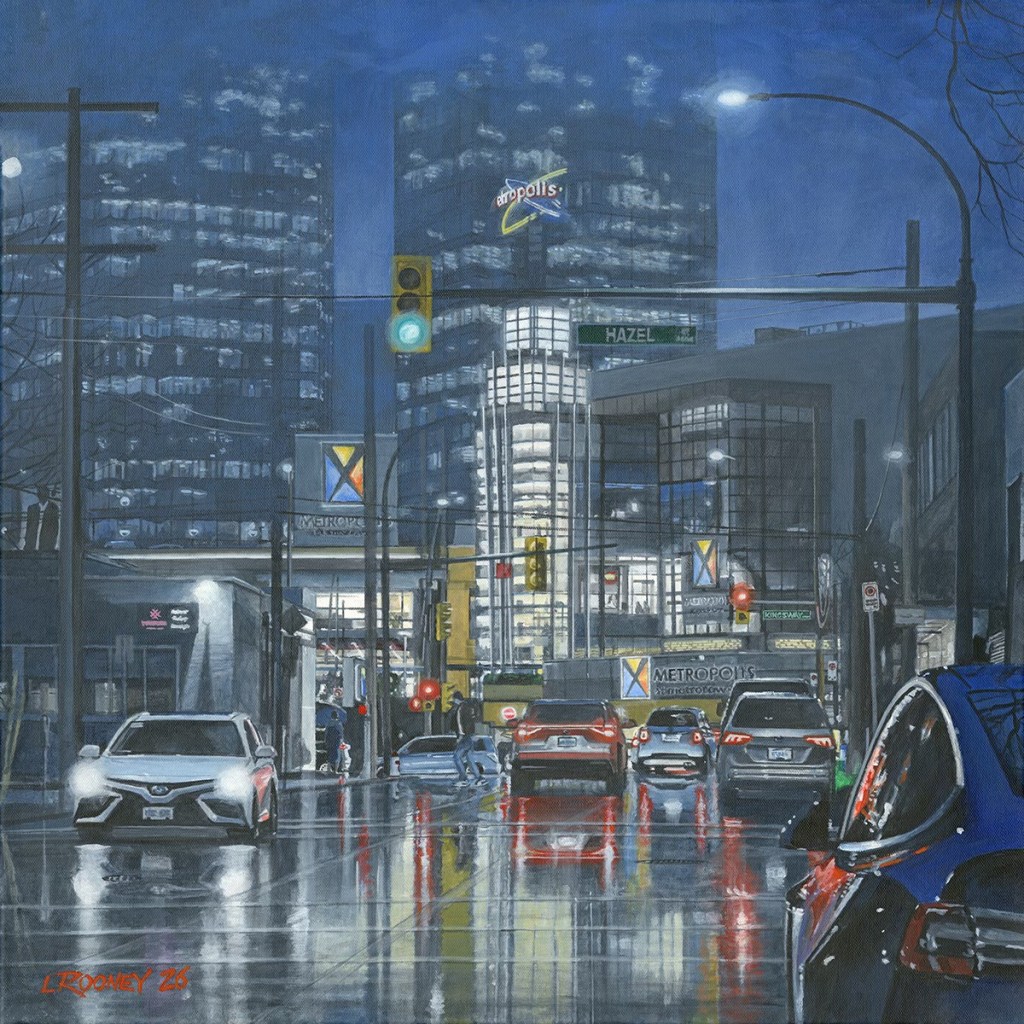
Imagine yourself at Metrotown on a busy Saturday in late August, right before the new school year. First, you turn on your parking juju, and hope to grab the princess parking right in front of the escalator.
Once you’re inside, the broad indoor hallways are teeming with people of all ages. They crisscross in all directions. You dodge a couple who cut you off. On the walkway above, there’s a couple kids setting off mini firecrackers, and security attempts to chase them away.
If you take your headphones off, which were successfully muffling the firecrackers, you’ll hear the powerful thrum of hundreds of voices travelling from the floor to the skylights.
You run into a friend, have a good laugh while window shopping, then go separate ways. Maybe you decide to catch a movie.
Metrotown is a slice of the community in one big, chaotic building.
40 Years Running
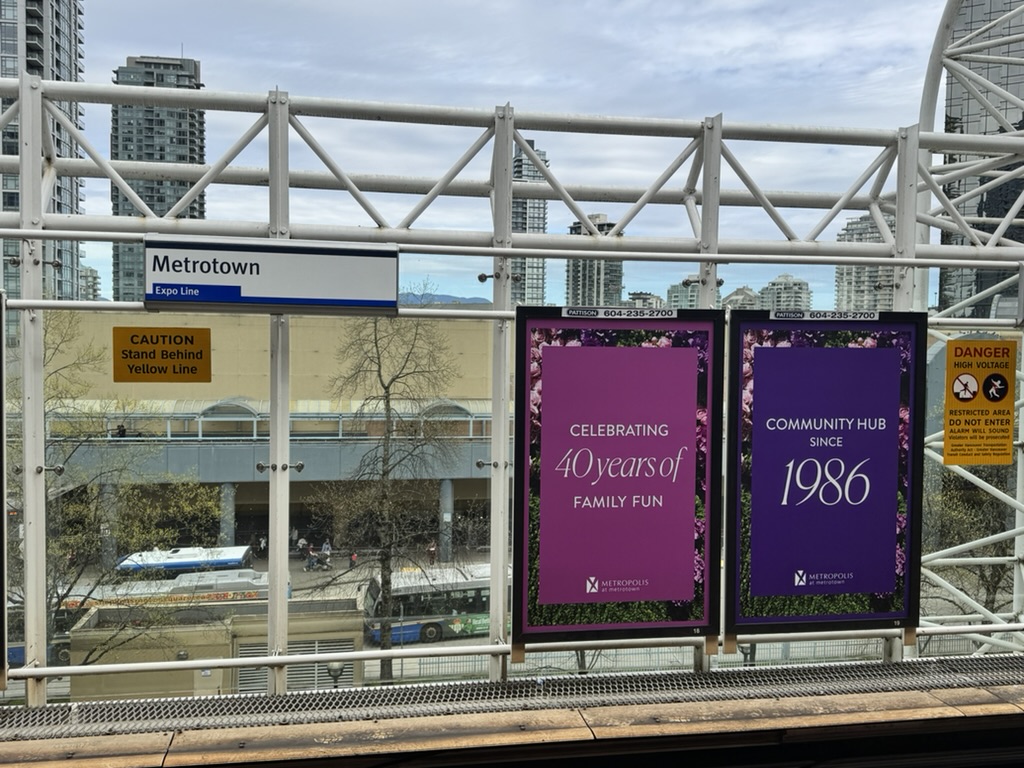
This year, Metropolis at Metrotown is celebrating it’s 40th anniversary. Fanfare includes a marketing campaign, exhibits, pop-ups, and even a visit from the Mayor.
As a Burnaby girl who grew up there, the anniversary has me reminiscing about the past. As a community planner in training, it has me looking to the future.


I went to check out the exhibit myself, and while a bit lackluster, the return of the cherry blossom decor was comforting.
Ford Factory to Food Court
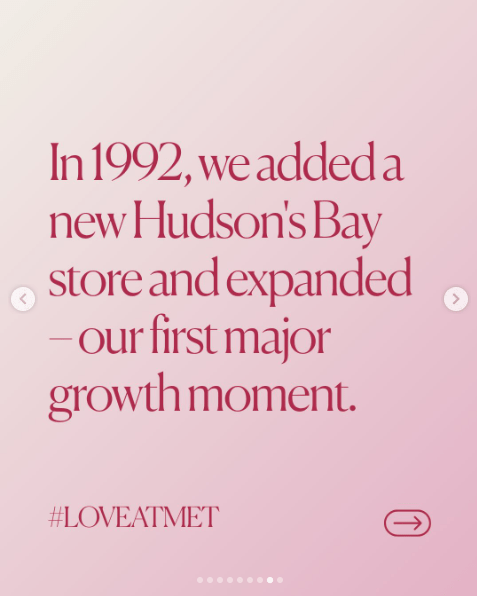
Metrotown has been a beacon of urban development for decades in Burnaby, and not by accident. With the implementation of the Expo Line SkyTrain, the city’s early “downtown” flourished with new connections to the region.
Before all that, the site had a Ford motor plant, food production warehouses, and Sears. My grandmother remembers this era, but when she moved to the neighbourhood around 1970, the site was not yet a bonafide mall.
Although I’ve lived abroad, and now live in Vancouver proper, my identity is still tightly linked to Burnaby and Metrotown.
Growing up as the fourth-generation in the same duplex, I have watched the neighbourhood transform, and heard from my relatives what it looked like before I was born.
High-rise apartment buildings started going up as early as the 1960s (part of the town centre planning,) but it wouldn’t be until the 2000s for major change to happen.


The now glittering Metrotown area is packed with skyscrapers and centralized by the largest mall in British Columbia. It’s become more lively and populated, yes, but this ongoing period of rapid development is not without issues like demovictions, traffic, and the loss of small businesses.
Even with good jobs, young people like myself can’t afford to rent or buy any of the new apartments above the SkyTrain stations. This is an issue across the country that we are all familiar with.
Metrotown mall is at the centre of one of the region’s earliest examples of Transit-Oriented Development, which is a concept that has now become required in B.C. for land within a few hundred metres of a SkyTrain station. It aims for cities to create denser housing near transit, to discourage car use, which I think is a good thing in general. But, how it’s implemented is critical to a community’s health and success.
A Connected Future?
Over the years, I have written about Metrotown several times, often inspired by class assignments which got my feet on the ground. I began viewing cities from a more intersectional, critical lens.
It’s undeniable that my growing up in Metrotown led me to urban planning. It’s the first city I fell in love with, and it got me thinking about streetscape design, community services, Indigenous histories, and the environment.


I get excited when I think about what the mall area will look like in the future. When I’m 65 years old in the year 2063, will I be living in Burnaby? How will it function, and how will it be connected to the rest of the region? Will it still have the largest economic influence in Burnaby? How many people will live in high rises, and who will those people be? Will they have a strong sense of community?
This is just a taste of what sort of questions run through my head when I’m walking down Kingsway to grab a Bubble Tea.
According to the City of Burnaby’s new long-term Official Community Plan, growth and connection will continue to be focused around the SkyTrain station. For example, there are plans for future rapid transit corridors from Metrotown, such as this recently announced route.
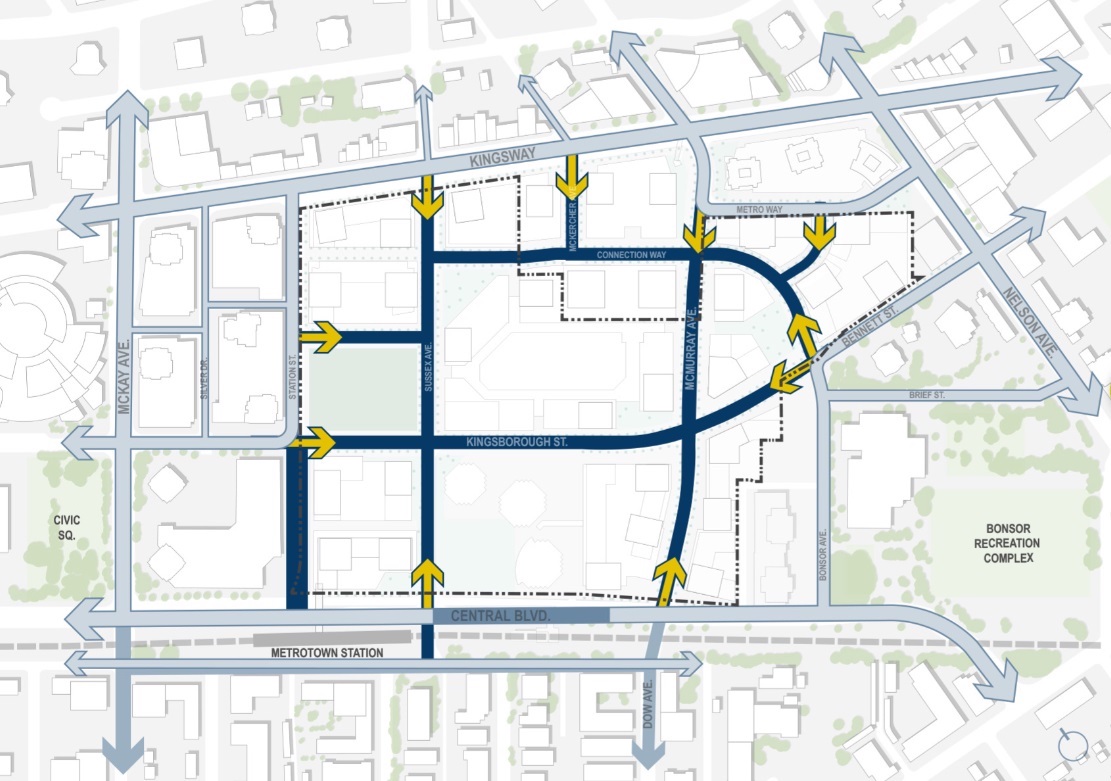
Burnaby also has a downtown plan, which gives the area more granular attention. The motion to create a new 100-year plan was approved in 2019, describing a shift to mixed uses, people-centred streets, and outdoor space.
When I mention this change to Burnaby friends, it’s often met with a gasp. It’s daunting that ground-level pathways may cut through what is now the shopping mall. But to me, the prospect is exciting.
It will take decades and many phases to change the mall area, and it may never truly be “done”, whatever that means. The most notable development on mall property at the moment is next to the empty Hudson’s Bay Company. There are a few towers clustered together right on the corner. My family and I are curious how it will look once complete.

What I hope is that Burnaby planners will use their legislative and design tools to create an equitable city core which supports different incomes and backgrounds. I hope it weaves in community services at ground level, and is a place where small businesses can thrive.
My Burnaby friends and I often find ourselves praising the city, and it makes me proud that despite a cost of living crisis and other major challenges, Burnaby still proves itself as a great place to live. There’s a lot that can be improved, and it should be, but we are on good footing.
Happy 40th anniversary Metropolis at Metrotown, the ultimate mall-rat playground. I’ll see you soon, no doubt.
What are your memories of Metrotown through the years? How do you envision it’s future?
If you want to geek out on mall theory like I do, check out these resources:
- Book: Meet Me by the Fountain: An Inside History of the Mall(Alexandra Lange, 2022)
- YouTube: How Shopping Malls are Designed to Overwhelm You (Architectural Digest, 2026)
- SFU paper I wrote in 2017: Geography of the Mall Field Study

 marina miller